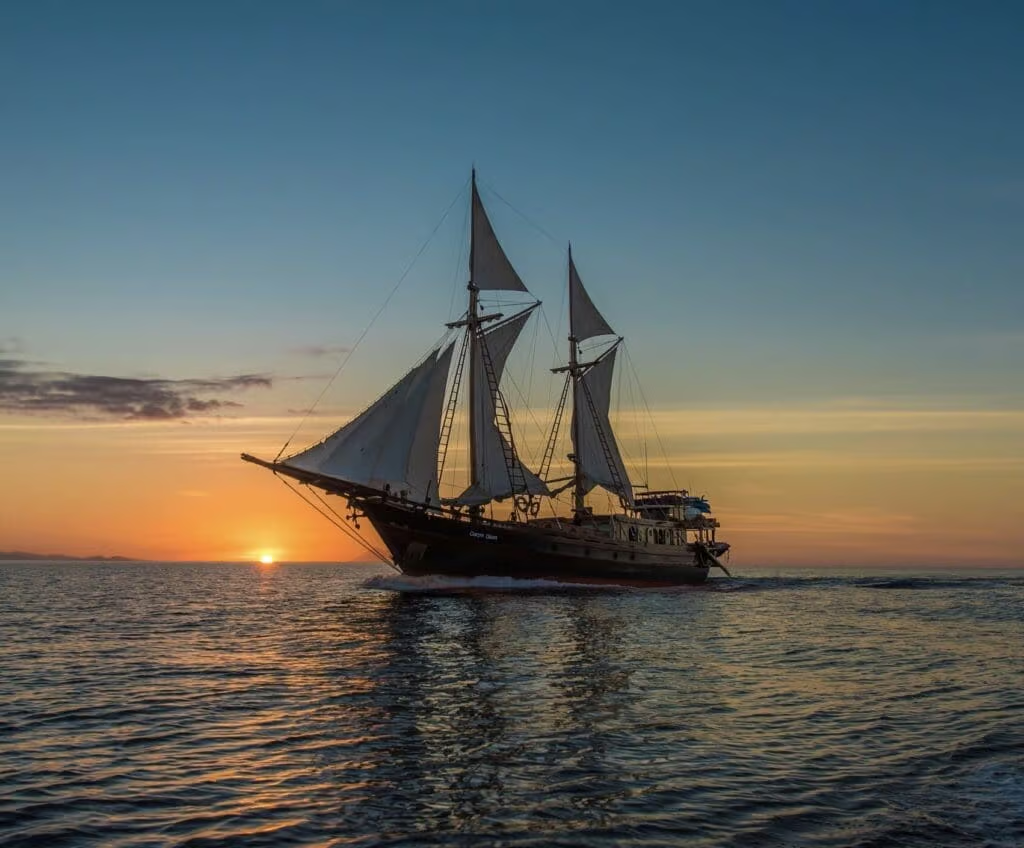
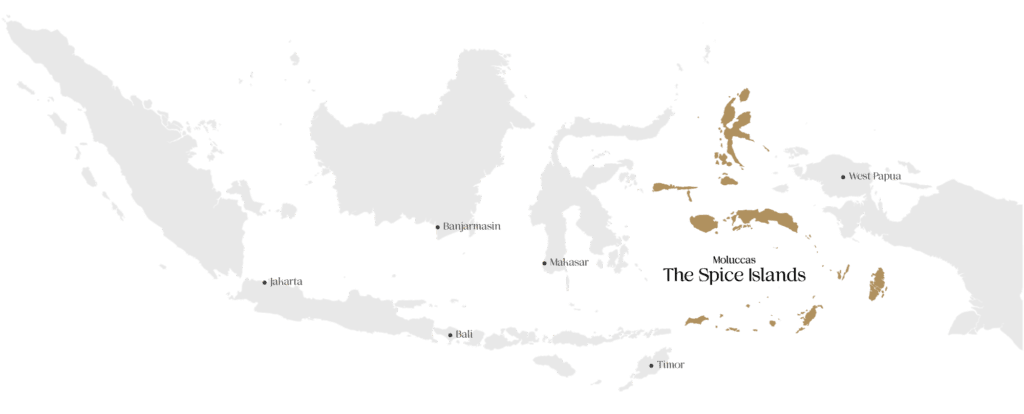
In the northeast of Indonesia, between Celebes (Sulawesi) and New Guinea, lies a collection of islands steeped in history and natural beauty.
One known as the Spice Islands, the region is known today as Maluku (or the Moluccas). These islands were once the epicenter of the global spice trade where exotic spices such as nutmeg, cloves, mace, and pepper thrived, drawing merchants and explorers from across the world.
Why Were The Spice Islands Important?
The Spice Islands, now known as Maluku or the Moluccas, were historically important because they were the original source of some of the world’s most valuable spices: cloves, nutmeg, and mace. For centuries, these small volcanic islands sat at the centre of Asian, Arab, Indian, Chinese, and later European trade networks. Their spices were so valuable that control of the islands helped drive European exploration, colonial rivalry, and the rise of powerful trading companies such as the Dutch East India Company.
Where are the Spice Islands?
The Spice Islands are located in eastern Indonesia, situated between the larger islands of Sulawesi to the west and New Guinea to the east. They lie in a scattered archipelago within the larger area of the Maluku Sea, encompassing both northern and southern hemispheres of the Indonesian maritime region.
These islands are part of the broader Southeast Asian island chain and are surrounded by several significant seas:
- The Banda Sea to the south
- The Halmahera Sea to the north
- The Ceram Sea to the west
This archipelago is composed of hundreds of small islands, with key clusters playing critical roles in the region’s history and trade. Today it is known as the Moluccas.
Timeline Of The Spice Islands
- Before European arrival — cloves, nutmeg, and mace were traded through Indonesian, Malay, Indian, Arab, and Chinese networks.
- 1512 — the Portuguese reached the Moluccas and began direct European trade in the region. Britannica notes the Portuguese established themselves in the islands in 1512.
- Late 1500s — Dutch and English merchants began challenging Portuguese influence.
- 1598 — the first English spice voyage produced strong profits despite heavy losses, showing how valuable the trade had become. The Royal Museums Greenwich notes that two of three ships were lost, yet the voyage still made a profit.
- 1600s — Dutch, English, Portuguese, Spanish, and local sultanates competed for control.
- 1667 — the Treaty of Breda confirmed one of the most famous territorial exchanges in history: Dutch control over Run in the Banda Islands and English control over New Netherland, including Manhattan.
- 1800s onward — spice cultivation spread beyond Maluku, reducing the islands’ monopoly.
- Today — the Spice Islands remain historically significant, culturally rich, and lightly visited.
Why were the Spice Islands important?
A Historic Trade Hub, the Spice Islands were integral to the thriving trade networks of the Far East long before European explorers ventured into the Indian Ocean in 1498.
Spices from the islands were exchanged for Chinese silks, Indian cottons, Arabian coffee, and African ivory, enriching civilizations across Asia and beyond.
However, it was the exorbitant spice prices in Europe that truly underscored the islands’ importance. Spices made their way to Europe through a complex overland route, passing through multiple traders, each adding a profit margin.
By the time the spices reached Venice, the primary trade hub between Europe and the East, their prices had soared to 1000% of their original value. This lucrative trade inspired a fervent search for direct sea routes to the islands.
Why were they called the Spice Islands?
The Spice Islands, now known as the Maluku Islands in Indonesia, earned their name due to their role as the world’s primary source of valuable spices like cloves, nutmeg, and mace during the height of the global spice trade.
These aromatic treasures, highly sought after in Europe and beyond, were native to these islands and could not be found elsewhere. The unique climate and volcanic soil of the region created ideal conditions for these spices to thrive, making the islands a focal point of exploration, trade, and conflict among European powers in the 15th and 16th centuries.
The Spice Trade Before Europeans Arrived
Long before Portuguese, Dutch, or English ships reached the Moluccas, the Spice Islands were already part of a sophisticated maritime trading world.
Cloves from the northern Moluccas and nutmeg from the Banda Islands moved first through local island networks, then outward through Malay, Javanese, Indian, Arab, and Chinese trade routes. By the time these spices reached distant markets, they had passed through many hands, ports, and cultures.
For centuries, spices from Maluku were exchanged for textiles, ceramics, metals, silks, coffee, ivory, and other valuable goods. Their rarity, fragrance, and distance from western markets made them extraordinarily valuable. To European buyers, cloves, nutmeg, and mace seemed almost mythical, precious commodities from islands few had ever seen.
When Europeans later sailed into the Indian Ocean, they were not searching for unknown spices. They were searching for direct access to the source, hoping to bypass the long-established Asian and Middle Eastern trade networks that already controlled the flow of spices west.
European Exploration and the Spice Trade
The Portuguese were the first Europeans to establish direct trade with the Spice Islands, arriving in the 1520s. They were followed by the Dutch and English approximately 80 years later.
Despite the challenges of navigating uncharted waters, the profits from the spice trade were enormous. For instance, the first English spice voyage in 1598 resulted in significant profits, even though two of the three ships were lost and only a modest cargo of spices was acquired.
The Banda Islands And The Nutmeg Trade
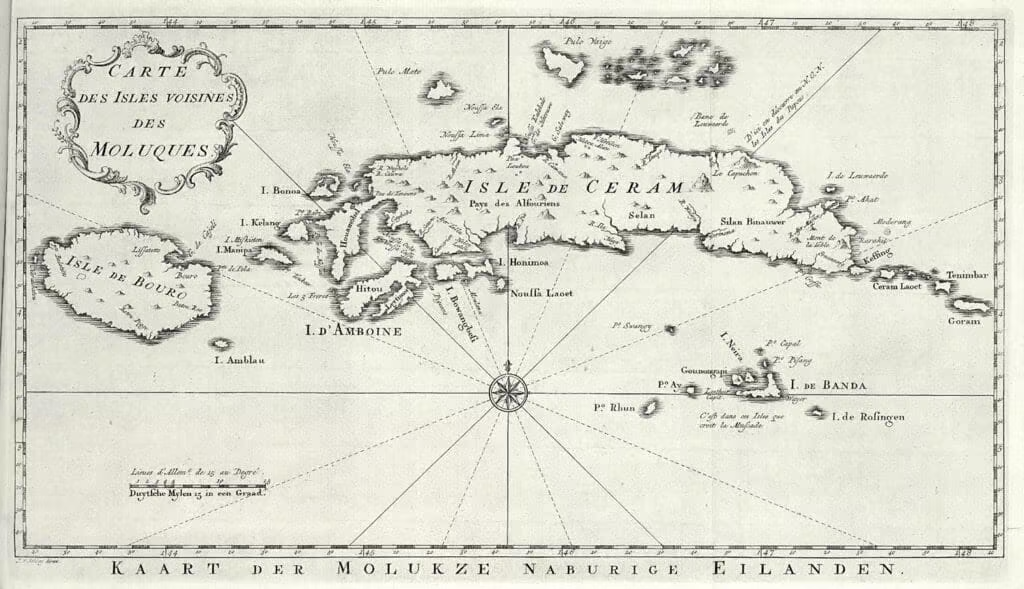
Of all the Spice Islands, the Banda Islands hold the strongest connection to nutmeg.
This small volcanic cluster in the Banda Sea was once the world’s only source of nutmeg and mace, two spices that became among the most valuable commodities in the global spice trade. For centuries, Banda’s fertile soil, humid climate, and isolated geography gave the islands an importance far beyond their size.
The main islands include Banda Neira, Banda Besar, Pulau Ai, Pulau Run, and Pulau Hatta. Each played a role in the wider spice economy, but Banda Neira became the administrative and trading centre, while Banda Besar was known for its nutmeg groves and plantations.
The value of Banda’s spices drew merchants from across Asia long before Europeans arrived. Later, the Portuguese, Dutch, and English competed fiercely for influence in the islands, not because Banda was large, but because nutmeg was rare, portable, and extremely profitable.
That competition left a visible mark on the islands. Fort Belgica still rises above Banda Neira, overlooking the harbour and neighbouring volcanic peaks. Old colonial buildings, plantation paths, village settlements, and nutmeg trees remain part of the landscape, making Banda one of the few places in Indonesia where the spice trade still feels physically present.
Banda’s history is also tied to one of the most famous exchanges in colonial history. Pulau Run, a small island in the Banda group, became strategically important because of its nutmeg. In the 17th century, English and Dutch rivalry over Run became part of the wider settlement that eventually confirmed Dutch control of the island and English control of New Netherland, including Manhattan.
Today, the Banda Islands are no longer the centre of a global monopoly, but their historical atmosphere remains unusually strong. Visitors can walk through nutmeg plantations, explore old forts, look across the harbour to Gunung Api, and see how a remote group of islands once helped shape world history.
Banda Islands
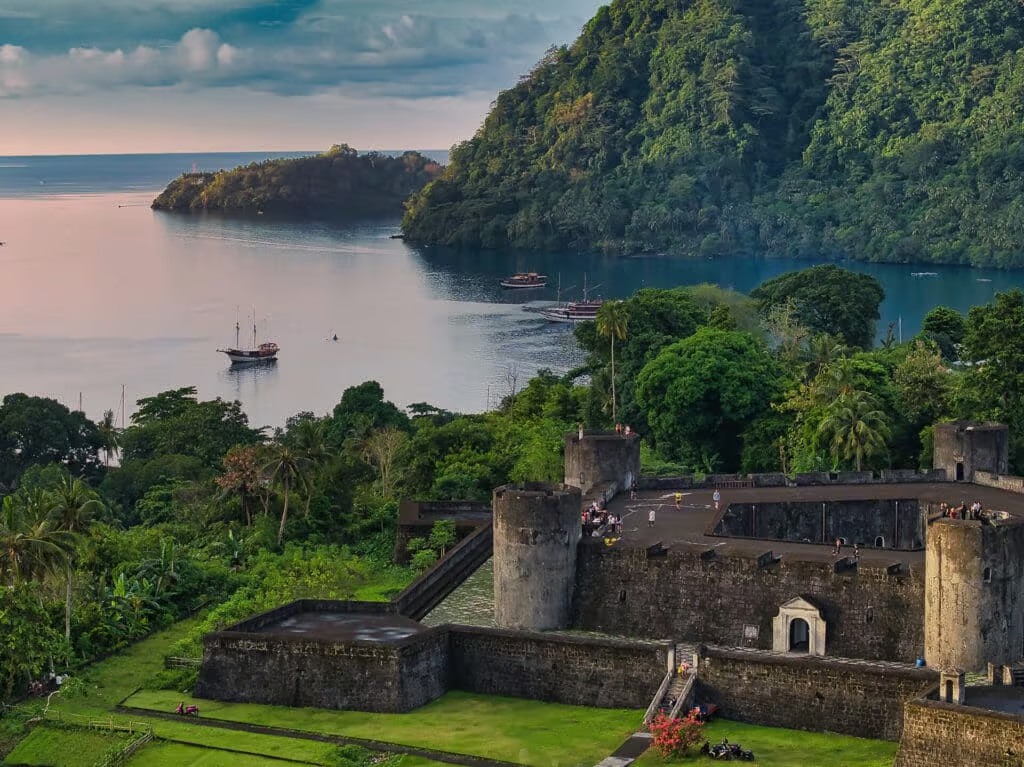
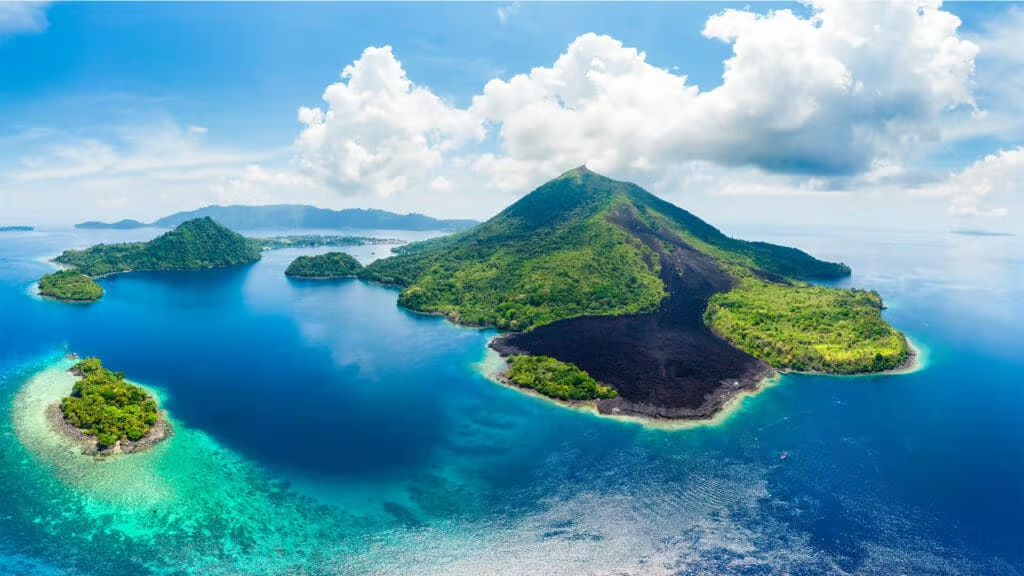
The Banda Islands, a cluster of 10 small volcanic islands, were the world’s sole source of nutmeg and mace during the height of the spice trade.
Located in the Banda Sea, they were highly coveted by European powers such as the Portuguese, Dutch, and English. The most prominent islands include Banda Neira, the administrative center; Banda Besar, the largest island; and Pulau Run, which became infamous for being traded by the British to the Dutch in exchange for Manhattan.
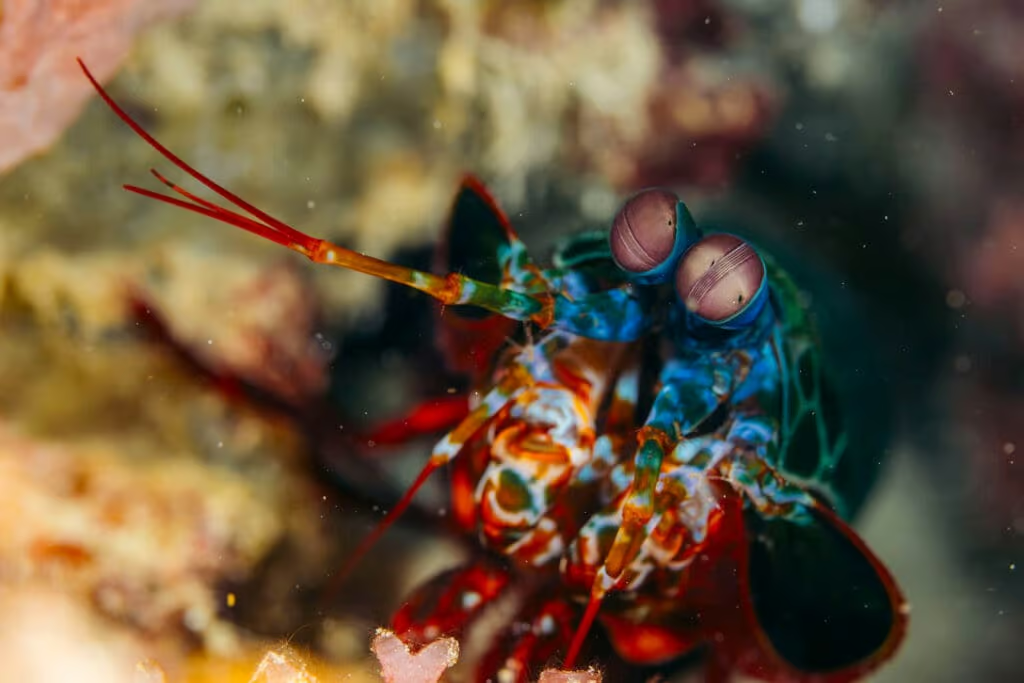
With rich colonial history, the islands are home to forts, old plantations, and cultural remnants from centuries of spice cultivation. Today, the Banda Islands are a paradise for divers, offering pristine reefs and abundant marine life.
Key Islands of Banda:
- Banda Neira (the main island)
- Banda Besar
- Pulau Run
- Pulau Ai
- Pulau Hatta
- Pulau Pisang
- Pulau Keraka
Ternate
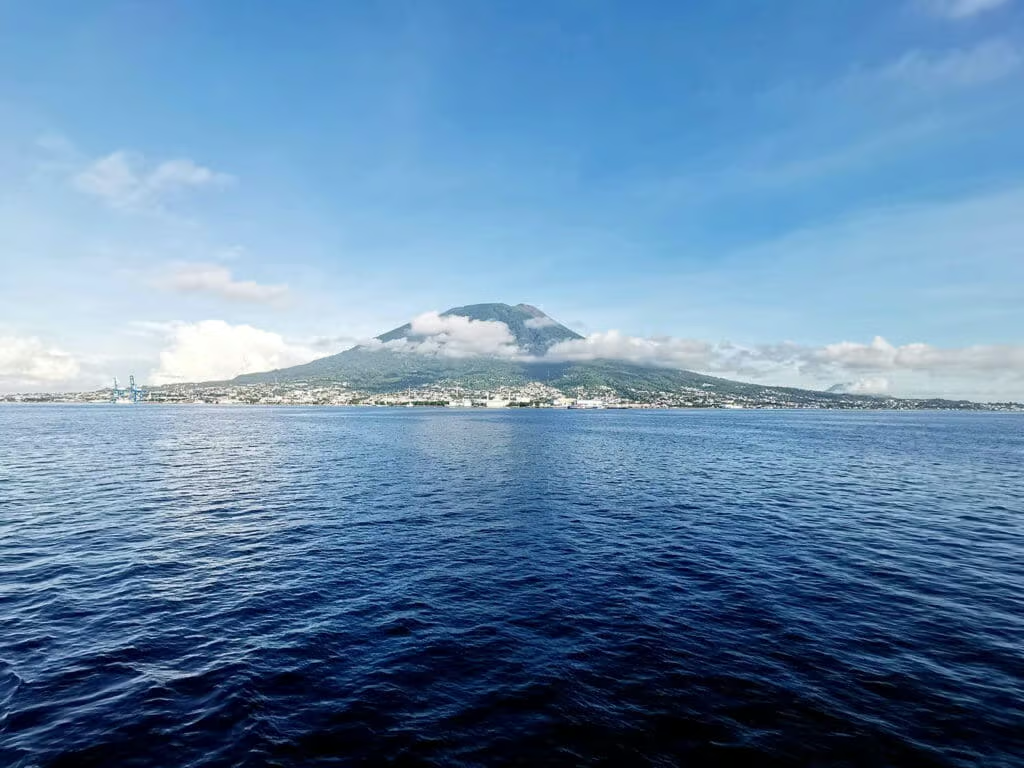
Ternate, one of the most famous Spice Islands, is dominated by Mount Gamalama, an active volcano that looms over its landscape.
Historically, it was the seat of the Sultanate of Ternate, a powerful trading kingdom that controlled clove production and commerce. The island’s strategic location made it a focal point for colonial powers, leading to periods of conflict and cultural exchange.
Ternate’s old forts, mosques, and sultan’s palace are testaments to its rich past. The island is also known for its natural beauty, with black sand beaches, lush forests, and volcanic hot springs.
Tidore
Tidore, a neighbor of Ternate, was a significant clove producer and rival to the Ternate Sultanate.
With its roots in the ancient spice trade, the island played a key role in regional politics and commerce. Mount Kie Matubu, Tidore’s towering volcanic peak, adds to its dramatic landscape.
The island is quieter and less developed than Ternate but retains its charm with historical sites like forts, traditional villages, and remnants of Spanish influence. Tidore’s strategic importance during the colonial era is reflected in its role as a key battleground for European powers.
Ambon
Ambon Island, the capital of the Maluku province, has a storied history as a trade hub during the Dutch East Indies era.
Although not a primary spice producer, its central location made it a key port for the transport and export of spices.
Ambon is home to Fort Victoria, a colonial stronghold, and museums that document the island’s past. Modern Ambon is a bustling city with a mix of cultures and religions, offering vibrant markets, traditional dances, and cuisine that reflects its multicultural heritage.
Surrounded by coral reefs, the island is also a destination for diving and snorkeling
Why Visit the Spice Islands Today?
While the Spice Islands once shaped global trade, today they offer something far rarer: one of Indonesia’s most rewarding and least-travelled regions to explore.
Spread across the Banda Sea and wider Maluku archipelago, the islands combine volcanic landscapes, world-class diving, layered colonial history, and a sense of remoteness that is increasingly hard to find elsewhere in Southeast Asia.
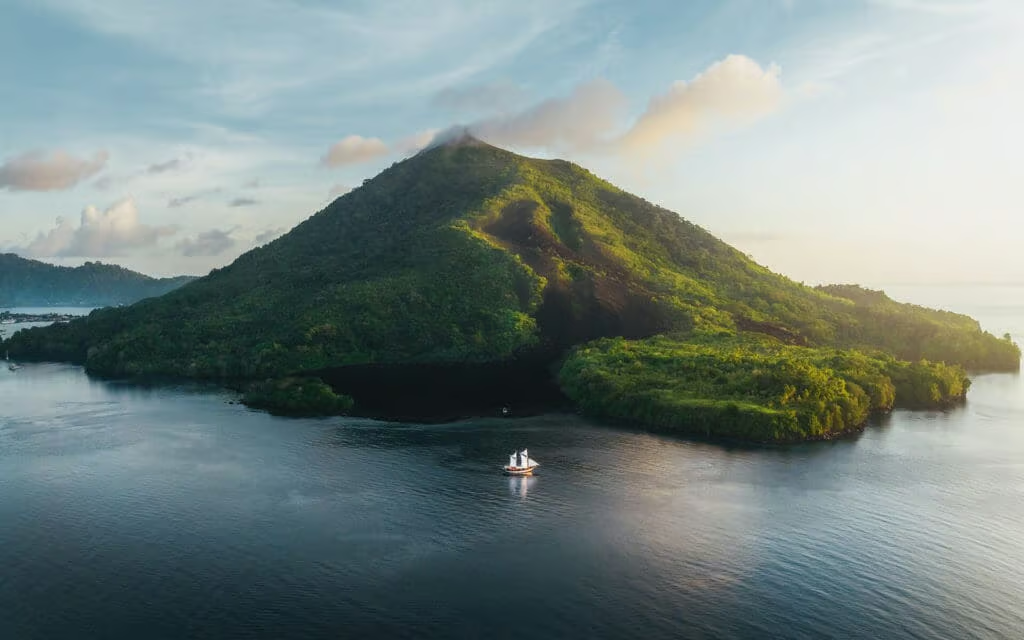
Deep History and Cultural Heritage
Few destinations in Indonesia carry such global historical significance. These islands once sat at the centre of the spice trade, drawing merchants and colonial powers from across Europe, Arabia, India, and Asia.
Today, forts such as Fort Belgica in Banda Neira, old trading houses, harbours, mosques, and village settlements offer a tangible connection to that past.
Nutmeg, Cloves, and Living Traditions
The story of the Spice Islands is not confined to museums. Nutmeg and clove trees still grow here, and visitors can walk through plantations, meet local communities, and experience traditions shaped by centuries of maritime exchange.
The aromas, flavours, and agricultural rhythms that once transformed world history remain part of everyday life.
True Remoteness
Perhaps the greatest appeal today is space. Compared with Bali, Komodo, or even Raja Ampat, the Spice Islands remain lightly visited.
That means quieter anchorages, uncrowded dive sites, slower travel, and a stronger sense of discovery—ideal for travellers seeking a more meaningful side of Indonesia.
Visit the Spice Islands Aboard Calico Jack
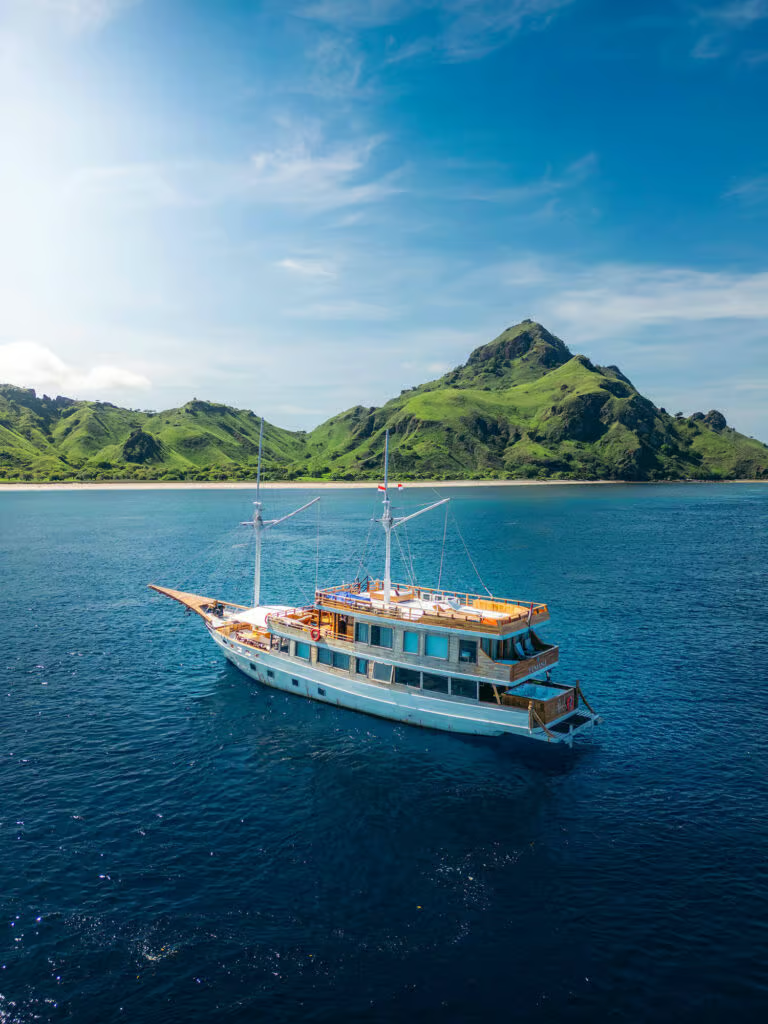
For travellers looking to experience the Spice Islands properly, one of the most rewarding ways is aboard the expedition yacht Calico Jack.
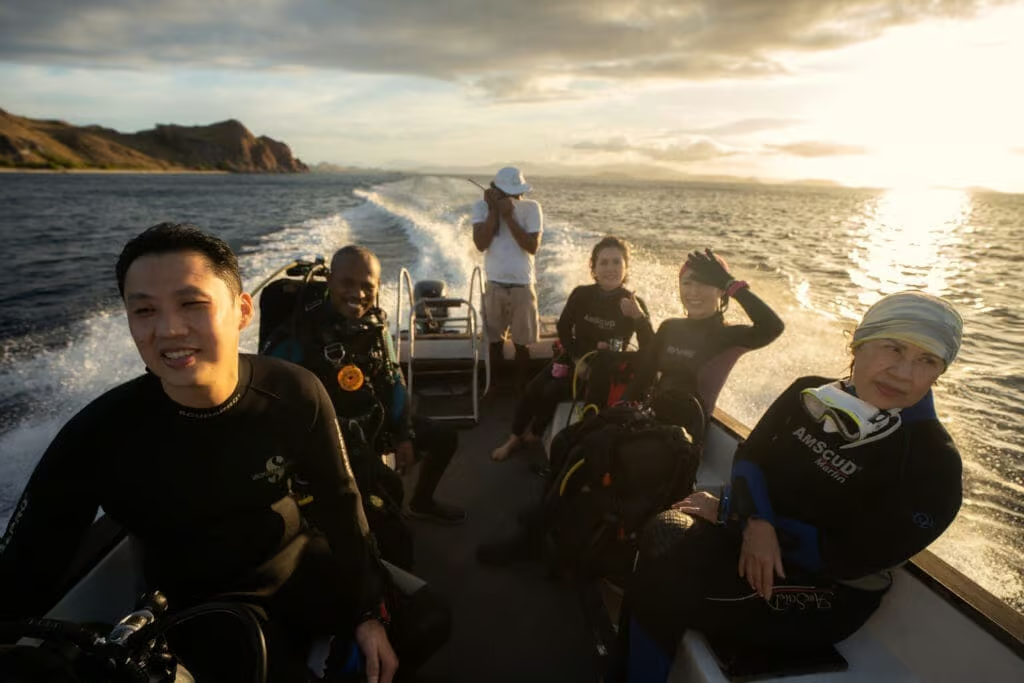
Purpose-built for remote Indonesian cruising, Calico Jack is one of the standout vessels operating these lesser-travelled waters, combining serious diving capability with the comfort and style needed for longer crossings through the Banda Sea.
Her 11 Night Sorong to Ambon Dive Expedition is a seasonal journey linking West Papua with the historic Spice Islands of Maluku, travelling through one of Indonesia’s most extraordinary and least-visited maritime regions.
Rather than simply visiting a single destination, this route unfolds as a true voyage across the eastern archipelago.
Depending on season and conditions, highlights include:
- Remote crossings through the Banda Sea
- Exceptional reef, wall, and pelagic dive sites
- Volcanic island scenery rising from open ocean
- Historic Banda Neira and its colonial spice legacy
- Nutmeg-growing islands and local village encounters
- Quiet anchorages rarely reached by conventional travellers
- Arrival into Ambon, gateway to Central Maluku
This is the kind of charter for guests who want more than a standard island itinerary. It suits experienced travellers, divers, and adventurous couples or groups seeking a deeper side of Indonesia, where the journey itself becomes part of the reward.
At Boatique Charters, we help guests access standout expedition routes such as this aboard trusted yachts like Calico Jack, with clear advice on timing, availability, and whether a Banda Sea crossing is the right fit for your travel plans.
What are the Spice Islands called today?
They are now generally known as Maluku or the Moluccas, a region of eastern Indonesia.
Why were the Spice Islands important?
They were the original source of cloves, nutmeg, and mace, which made them central to global trade for centuries.
Where are the Spice Islands located?
They are located in eastern Indonesia, between Sulawesi and New Guinea, across the Maluku and Banda Sea region.
Which spices came from the Spice Islands?
The most famous spices were cloves, nutmeg, and mace.
Were the Spice Islands traded for Manhattan?
The simplified story is that Run Island and Manhattan were part of the 1667 Treaty of Breda settlement between the Dutch and English. The Dutch secured Run, while the English retained New Netherland, including Manhattan.
Can you visit the Spice Islands today?
Yes. Travellers can visit parts of Maluku, especially Banda Neira, Ambon, and the Banda Islands. Many islands are remote, so yacht or expedition travel is often the most seamless way to explore.
More helpful information on planning your perfect Indonensia yacht charter
How to Plan Your Private Yacht Charter in Indonesia
Private Charter vs Open Trip in Indonesia
What Is a Phinisi Yacht?
How Much Does a Yacht Charter in Indonesia Cost?