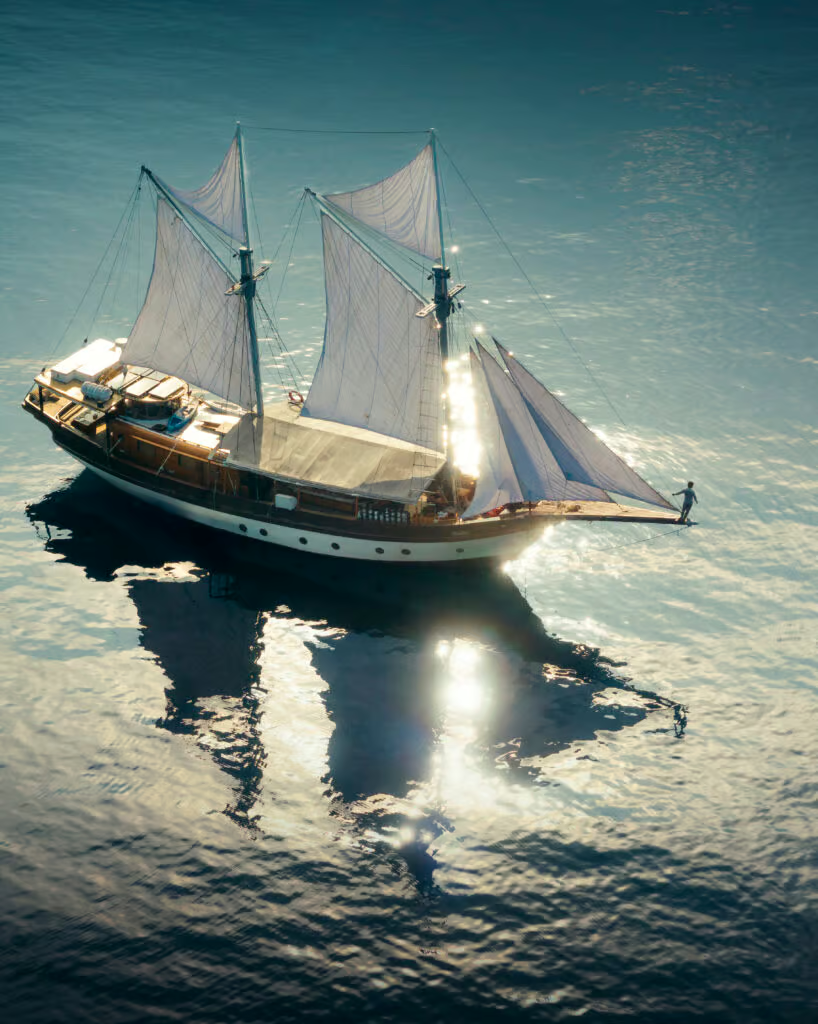
Indonesia’s most iconic yacht is not a modern invention. The phinisi, a traditional wooden sailing vessel built in South Sulawesi, has been navigating these waters for centuries, long before it became the foundation of today’s luxury charter fleet.
Originally used for trade across the Indonesian archipelago, phinisi yachts have evolved into fully crewed liveaboard vessels, combining handcrafted construction with contemporary design, private cabins, and expedition capability.
Today, they offer one of the most distinctive ways to explore Indonesia, moving between regions like Raja Ampat, Komodo, and the Banda Sea with a level of access and character few other yachts can match.
This guide explains what a phinisi yacht is, how it’s used today, and how to choose the right vessel for your charter.
What Is a Phinisi Yacht?
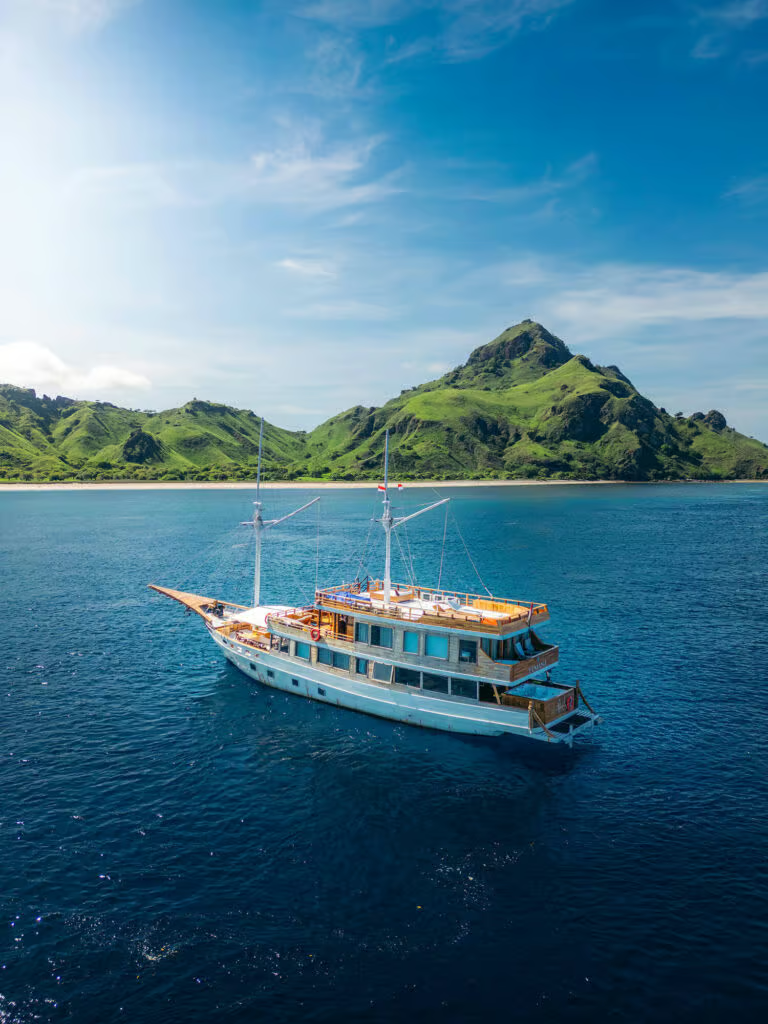
A phinisi (pronounced: fin-ih-see) yacht is a traditional Indonesian wooden sailing vessel, originally built by the Bugis and Konjo shipbuilders of South Sulawesi, and now widely used as luxury liveaboard yachts for private charters across Indonesia.
Defined by its two masts and distinctive seven-sail rigging, the phinisi was historically used for trade across the Indonesian archipelago. Today, these handcrafted vessels have been reimagined as fully crewed charter yachts, combining traditional boatbuilding techniques with modern comforts.
From Raja Ampat to Komodo and the Banda Sea, phinisi yachts are now the foundation of Indonesia’s yacht charter industry, offering a unique way to explore the country’s most remote regions by sea.
Phinisi Yachts in Modern Indonesia
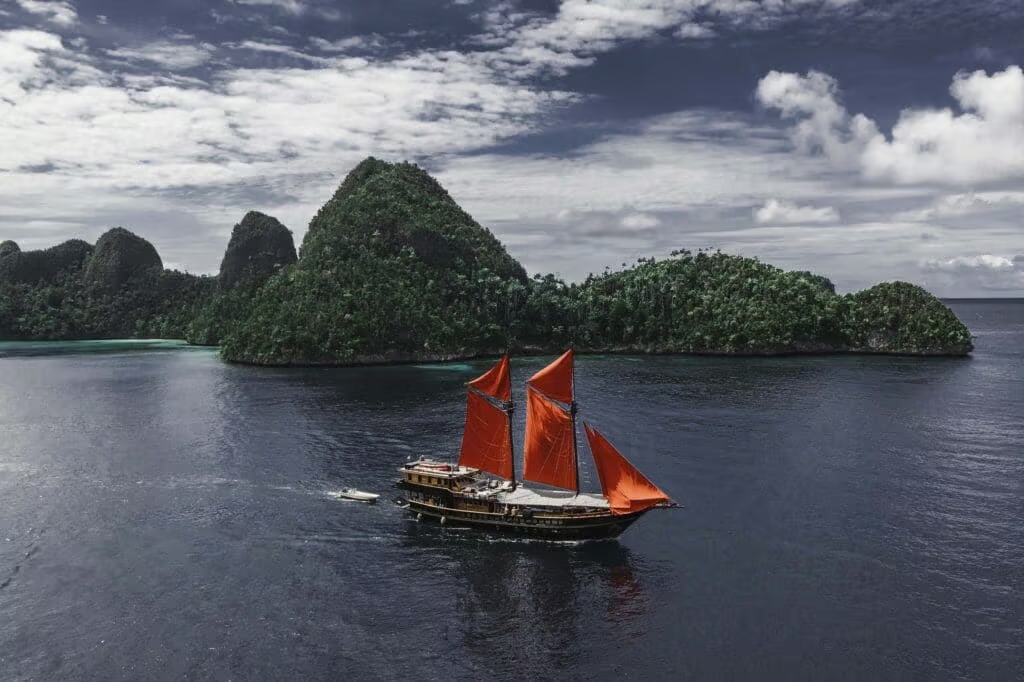
While the phinisi’s origins lie in trade and exploration, its role today is firmly tied to private yacht charter in Indonesia.
Over the past two decades, these traditional vessels have been adapted into fully crewed liveaboard yachts, designed for multi-day journeys through some of the country’s most remote regions. From Raja Ampat and Komodo to the Banda Sea and beyond, phinisi yachts now form the backbone of Indonesia’s charter fleet.
Modern phinisi yachts typically range from 30 to 55 metres in length and accommodate between 6 and 18 guests. While they retain their distinctive masts and sails, most rely on engines for consistent navigation, with sailing used when conditions allow.
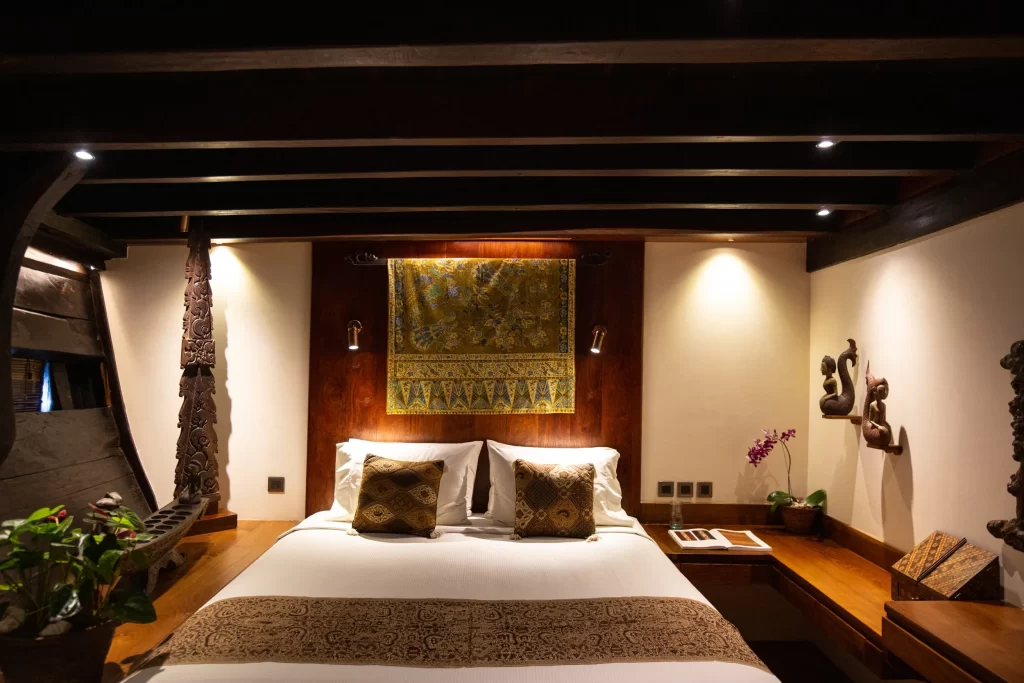
Onboard, the experience has evolved significantly. Today’s vessels feature private cabins, indoor and outdoor lounges, dining areas, and dedicated crew—often including dive guides, chefs, and expedition leaders depending on the charter.
This combination of traditional construction and modern capability is what defines the phinisi today: not simply a heritage vessel, but a purpose-built platform for exploring Indonesia by sea.
Types of Phinisi Yachts
While all phinisi yachts share the same traditional design and heritage, they vary widely in how they are built, configured, and used today.
At a broad level, phinisi yachts can be grouped into three main types based on their design and intended use.
Traditional Phinisi Vessels
These are closer to the original working boats, with simpler layouts and minimal modifications. While still in operation in parts of Indonesia, they are rarely used for private charters and are not typically suited to modern guest expectations.
Liveaboard Phinisi Yachts
Liveaboard phinisi yachts are designed for multi-day trips, particularly for diving-focused charters. They prioritise functionality, with practical cabin layouts, dive decks, and equipment storage.
These vessels are commonly found in regions like Raja Ampat and Komodo, where extended time at sea and access to remote sites are key.
Luxury Phinisi Yachts
Luxury phinisi yachts represent the most developed version of the design, combining traditional wooden construction with modern interiors, private cabins, and full crew service.
They are built for private charters, offering a more refined onboard experience while retaining the character and craftsmanship of the original vessel.
While these categories provide a general framework, the standard and experience can vary significantly from one yacht to another. Understanding these differences is key when choosing the right phinisi for your charter.
The Bugis Legacy – Builders of the Phinisi
The origins of the phinisi lie with the Bugis and Konjo seafaring communities of South Sulawesi, groups long recognised for their deep connection to the ocean and their shipbuilding expertise.
For centuries, these communities built and sailed wooden vessels across the Indonesian archipelago, using them for trade, transport, and exploration. The phinisi became their most recognisable design: a vessel shaped by necessity, refined through experience, and adapted to the demands of open-water travel.
Each phinisi is still constructed by hand in villages such as Ara, Tanah Beru, and Bira, using techniques passed down through generations. Traditionally built from teak and ironwood, the process relies on craftsmanship rather than formal plans, with builders shaping each hull based on proportion, balance, and inherited knowledge.
Boatbuilding is not treated as a purely technical process. It is closely tied to cultural practice, with ceremonies and rituals marking key stages of construction, from the laying of the keel to the launching of the vessel. This combination of practical skill and cultural tradition is what led to the craft being recognised by UNESCO as part of Indonesia’s Intangible Cultural Heritage.
The result is a vessel that reflects both function and identity—designed to navigate Indonesia’s varied waters while carrying forward a maritime tradition that continues to define the phinisi today.
UNESCO Recognition and Cultural Heritage
In 2017, UNESCO inscribed the art of phinisi shipbuilding on its Representative List of the Intangible Cultural Heritage of Humanity, recognising it as a living tradition shaped by generations of craftsmanship and cultural practice.
This recognition centres on the boatbuilding communities of South Sulawesi, particularly in villages such as Ara, Tanah Beru, and Bira, where the phinisi continues to be built using traditional methods. In these regions, shipbuilding remains a core part of community life, with knowledge passed down through family lines and long-standing apprenticeships.
The designation reflects more than the physical vessel. It acknowledges the skills, rituals, and collective knowledge involved in constructing each phinisi, from the shaping of timber to the ceremonial stages of building and launch.
Today, this heritage continues to define the phinisi’s role in Indonesia. While many vessels have evolved into modern charter yachts, the underlying craft remains unchanged, rooted in a tradition that is recognised, protected, and carried forward by the communities that build them.

What It’s Like Onboard a Phinisi Yacht
A modern phinisi yacht is designed for multi-day journeys at sea, where the experience is shaped as much by the pace of travel as the destinations themselves.
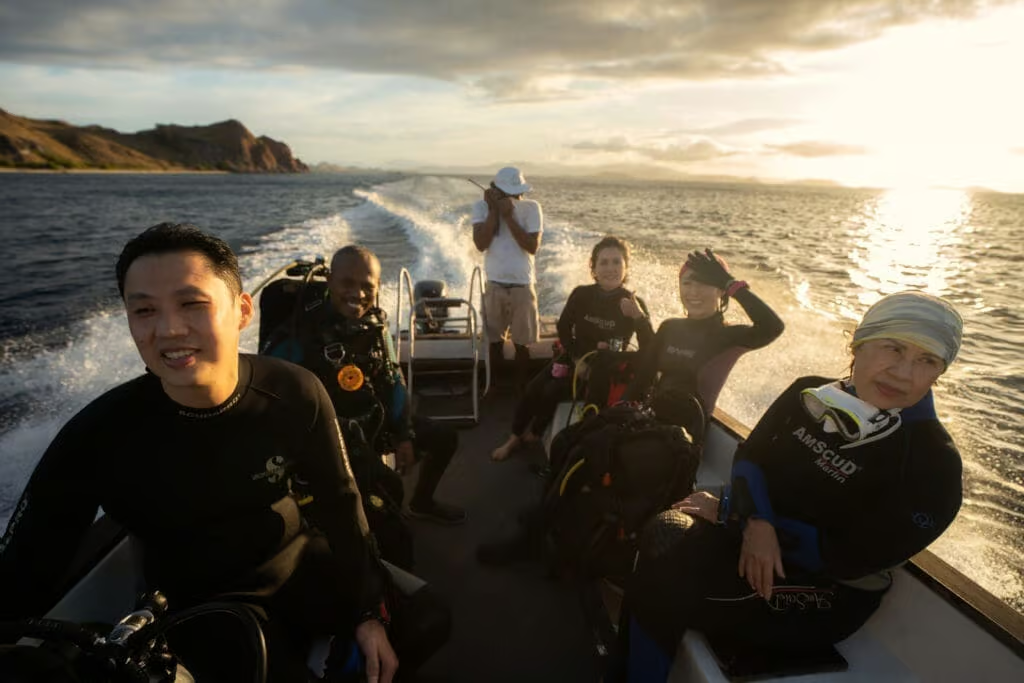
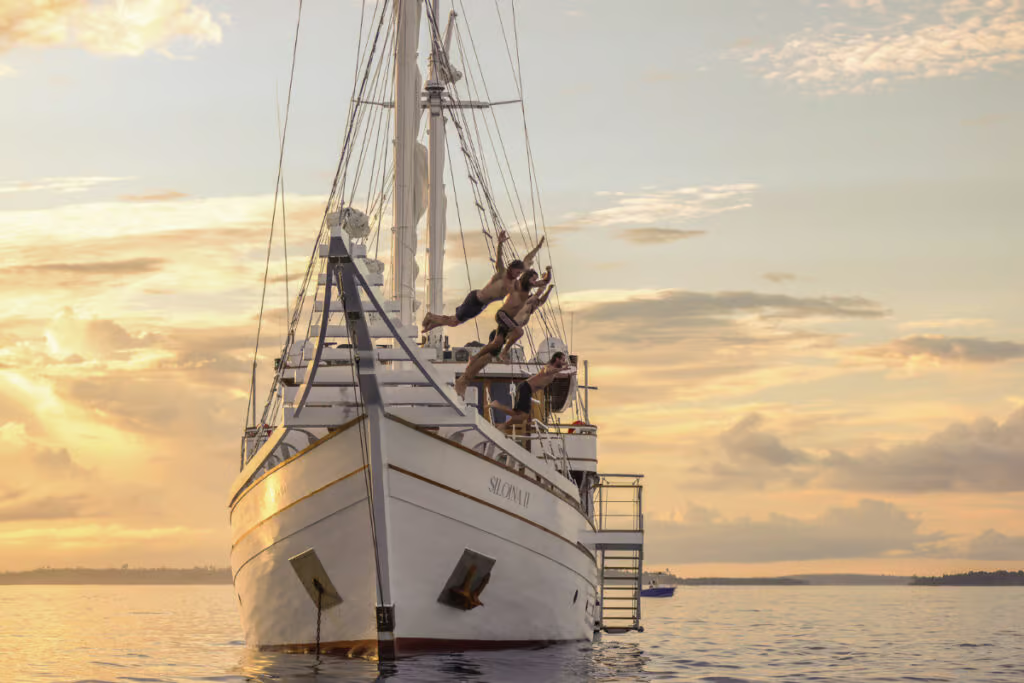
Life onboard is structured but unhurried. Days typically begin with early light over open water, followed by time spent diving, snorkelling, or exploring nearby islands. Afternoons are often slower—anchored in sheltered bays, with space to rest, swim, or move between indoor and outdoor areas of the yacht.
Most phinisi yachts are fully crewed, with teams that may include a captain, deck crew, chef, and guides or dive staff depending on the charter. Service is informal but attentive, with meals prepared onboard and schedules adapted to weather, conditions, and guest preferences.
The layout of each vessel varies, but generally includes private cabins, open deck areas, shaded lounges, and communal dining spaces. Compared to larger superyachts, the experience is more connected—to the environment, to the water, and to the rhythm of the journey itself.
Rather than moving quickly between fixed destinations, a phinisi charter is defined by flexibility. Routes shift, anchorages change, and each day unfolds based on conditions and opportunity, offering a more fluid way to explore Indonesia’s remote regions.
How to Choose the Right Phinisi Yacht
While most yacht charters in Indonesia are built around phinisi vessels, the experience can vary significantly depending on the yacht you choose.
The key differences come down to scale, layout, level of service, and how the yacht is designed to be used. Some are built for diving and extended time at sea, with a more functional, expedition-led setup. Others are designed for private charters, with larger cabins, more refined interiors, and a greater focus on comfort and space.
Your choice will depend on a few core factors:
- Group size — larger groups may require bigger vessels with more communal space
- Budget range — pricing varies significantly depending on size, design, and crew
- Type of experience — diving-focused, mixed leisure, or fully private escape
- Destination and routing — more remote regions often require yachts with greater range and capability
Rather than approaching this as a single category, it’s more useful to think of phinisi yachts as a spectrum, ranging from simpler liveaboards to larger, design-led charter vessels.
Understanding where you sit within that range is the first step in choosing the right yacht for your journey.
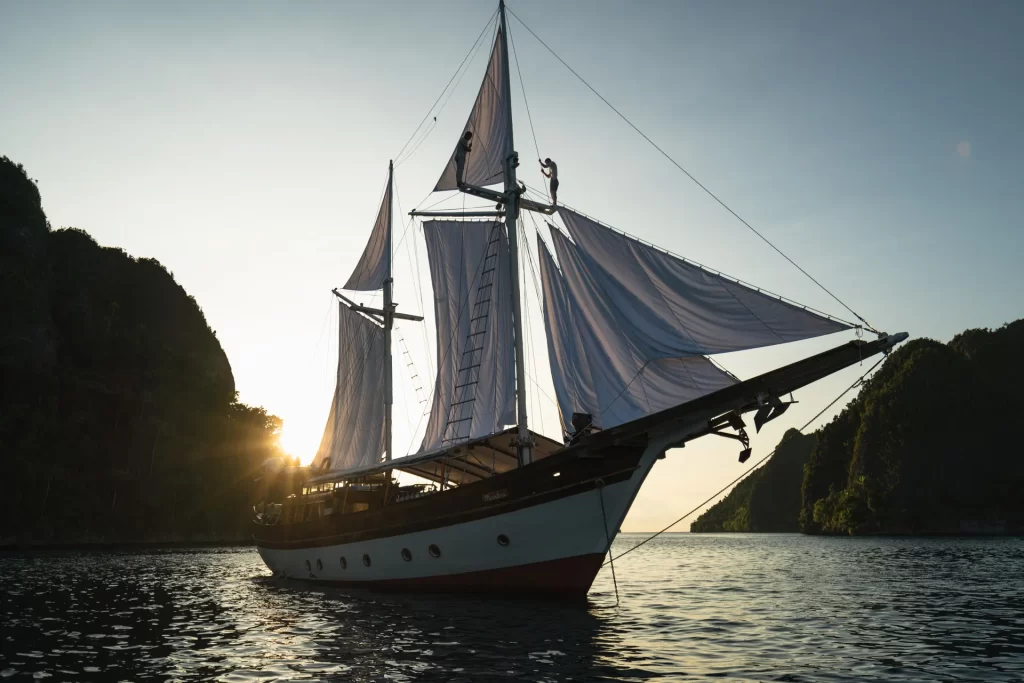
Explorer Yachts
$4,000 – $8,000 per night
Well-suited to smaller groups, diving-focused trips, and more flexible itineraries across regions like Komodo Island and Raja Ampat. These are often traditional phinisi yachts with 3–5 cabins and experienced crew.
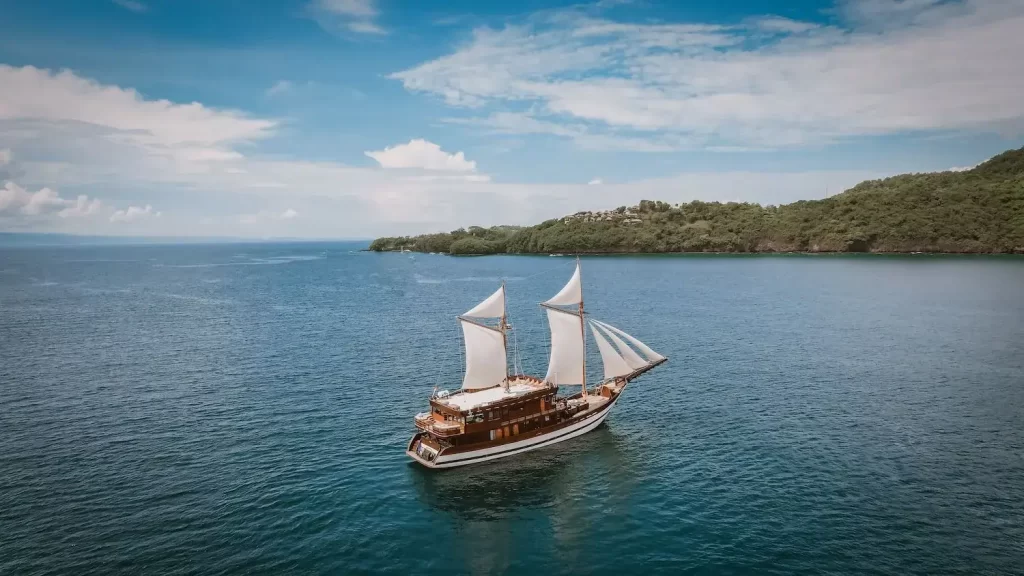
Premium Yachts
$8,000 – $14,000 per night
A step up in space, design, and onboard comfort. Ideal for families or private groups seeking a more refined charter experience, with larger cabins, dedicated dining areas, and enhanced service.
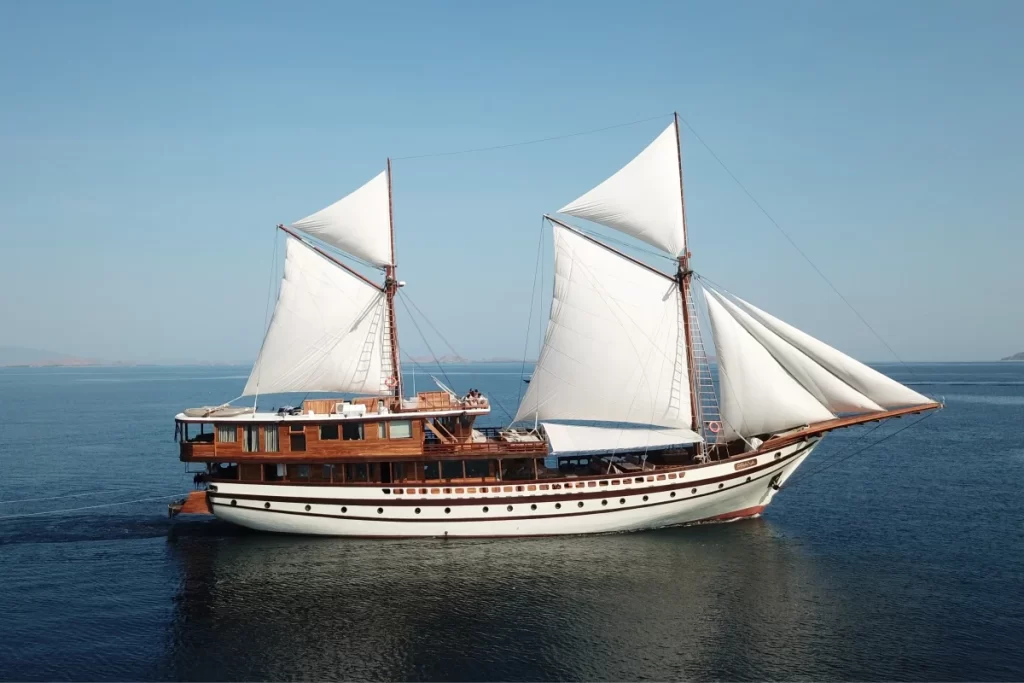
Legend yachts
$14,000+ per night
High-end luxury yacht charters offering expansive layouts, premium finishes, and a higher crew-to-guest ratio. Designed for larger groups, special occasions, or those seeking the highest standard of private charter in Indonesia.
Phinisi Yacht Charter Costs
The cost of a phinisi yacht charter in Indonesia varies widely depending on the size of the vessel, level of finish, crew, and destination.
As a general guide, weekly charters can range from around $10,000 for simpler liveaboard yachts to over $150,000+ for larger, fully crewed luxury vessels. Most charters fall somewhere in between, depending on the experience you’re looking for.
For a full breakdown of pricing, inclusions, and what to expect at each level, explore our detailed guide to yacht charter costs in Indonesia. Or speak with our team for a tailored estimate based on your dates and group.