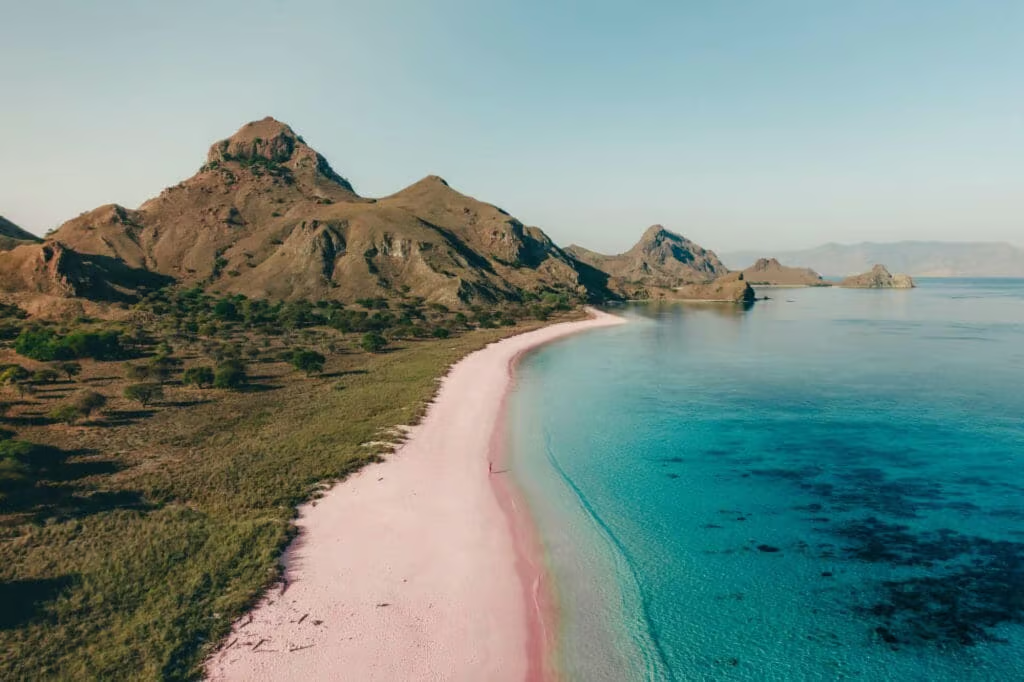
Quick Answer: Yes, Indonesia Can Be Good For Beginner Divers
Indonesia is good for beginner divers when the destination, season, dive sites, and operator are chosen carefully. Bali and the Gilis are simple places to learn, while Komodo, Raja Ampat, Triton Bay, and other remote regions can work for beginner or improving divers when guided by experienced dive operators. The key is not chasing famous sites, but choosing suitable conditions.
Indonesia can be excellent for beginner divers, but only when the trip is planned carefully. The country has some of the richest marine life on earth, from shallow coral gardens and turtles to manta rays, reef sharks, muck diving, wreck diving, and spectacular reef systems across Komodo, Raja Ampat, Triton Bay, and beyond.
But Indonesia is not a one-size-fits-all scuba diving destination. Some dive sites are calm and suitable for newer Open Water divers. Others involve strong currents, drift dives, deep walls, or remote conditions that are better left to experienced divers.
In This Article
We’ll look at whether Indonesia is suitable for beginner divers, how destinations such as Komodo, Raja Ampat, and Triton Bay can be approached safely, and why experienced dive operators matter more than simply choosing a famous dive site.
We’ll also cover what makes a dive beginner-friendly, how currents and seasons affect diving in Indonesia, and how private yacht charters can be planned for groups with different levels of dive experience.
Key Takeaways
- Indonesia is good for beginner divers when the right sites are chosen.
- Komodo and Raja Ampat can work for beginners, but not every dive site is suitable.
- Strong currents are common in some regions, so local operator knowledge matters.
- Beginner-friendly does not mean boring — calm sites can still offer coral reefs, manta rays, turtles, reef fish, and exceptional marine life.
- Private yacht charters work well for mixed-level groups, especially when some guests dive, some snorkel, and others prefer time onboard or ashore.
- The most important factor is the dive operator, not just the destination name.
Is Indonesia Suitable For Beginner Divers?
Indonesia can be a very good destination for beginner divers, but it depends heavily on where you dive, when you go, and who is guiding you.
This is not a country where every famous dive site is suitable for every new diver. Indonesia has calm coral gardens, shallow reef slopes, sheltered bays, manta cleaning stations, wrecks, and easy check-dive sites. It also has strong currents, deep walls, drift dives, remote crossings, and advanced sites where experience matters.
For beginner divers, the key is not avoiding Indonesia’s best diving regions. It is choosing the right parts of them.
Komodo, Raja Ampat, Triton Bay, and other remote dive destinations can all offer beautiful underwater experiences for newer divers when the itinerary is planned properly. The safest and most rewarding trips are built around daily conditions, guest confidence, certification level, and the judgement of experienced dive operators.
A beginner-friendly dive in Indonesia usually means:
- manageable depth
- calm or predictable current
- clear entry and exit points
- good visibility
- experienced guides
- conservative dive planning
- no pressure to follow advanced divers
- flexibility to snorkel or skip a dive when conditions are not suitable
This matters because Indonesia’s marine life is often strongest where water is moving. Currents bring nutrients, and nutrients bring fish, manta rays, reef sharks, turtles, and healthy coral reefs. But those same currents need to be respected, especially by newer Open Water divers.
That is why operator experience is central. A good Indonesia dive operator does not simply take guests to the most famous dive sites. They choose the right site for the right diver on the right day.
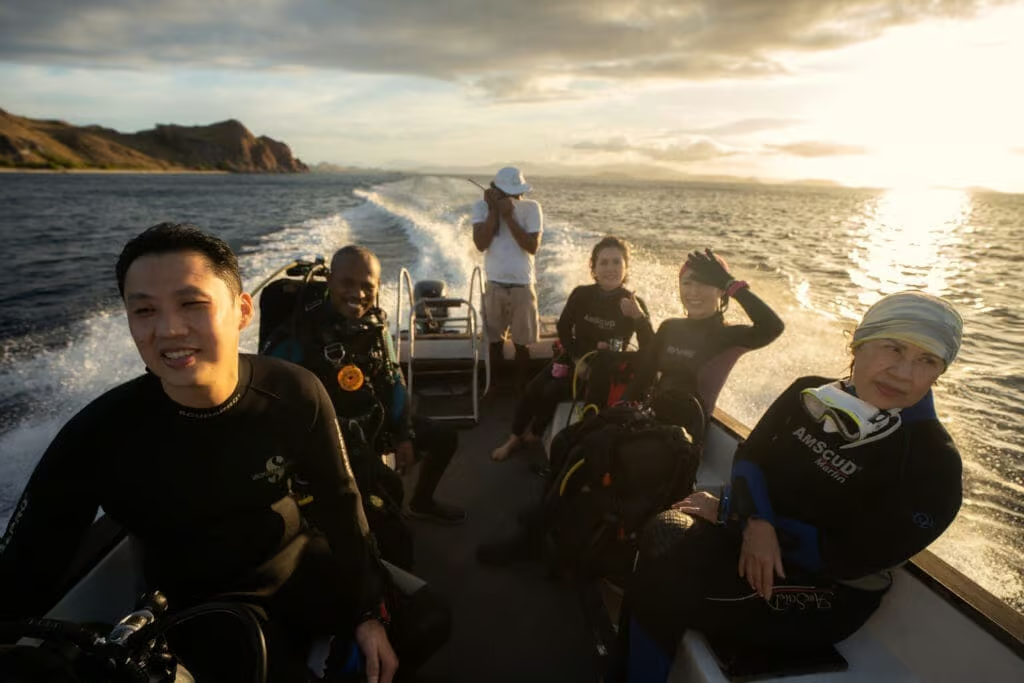
For private yacht charters, this is especially important. A mixed group may include confident divers, newer divers, snorkellers, children, and guests who simply want to enjoy the yacht and the islands. The itinerary should be shaped around the whole group, not just the strongest diver onboard.
Related Reading: Learn to Dive in Indonesia
Why Indonesia Is Not A Simple Beginner Dive Destination
The country stretches over 17,000+ islands, with dive conditions that change dramatically from one region to another. A sheltered reef in Raja Ampat may be calm and easy in the morning. A site nearby may be better suited to experienced divers because of current, depth, or exposure. In Komodo, one dive site may offer gentle coral gardens, while another requires confident drift diving and strong buoyancy control.
That variation is part of what makes diving in Indonesia so special. It is also why beginner divers need thoughtful planning.
Several factors can affect whether a dive site is suitable:
- Current — some sites have gentle movement; others can have strong or changing currents.
- Tide and moon phase — conditions can shift throughout the day.
- Depth — some sites are shallow and relaxed; others drop quickly into deeper water.
- Entry style — beginner divers are usually better with calm, controlled descents rather than negative entries.
- Surface conditions — wind, swell, and boat movement can affect comfort before and after the dive.
- Visibility — clear water helps newer divers feel calm and oriented.
- Remoteness — in places like Triton Bay, Raja Ampat, and the Banda Sea, planning and safety systems matter even more.
This is why the question is rarely, “Is Komodo beginner-friendly?” or “Is Raja Ampat beginner-friendly?”
The better question is:
Which sites are suitable today, for this diver, with these conditions?
That is the difference between generic dive planning and experienced operator judgement.
For beginner divers, Indonesia should not be approached as a checklist of famous dive sites. Manta Point, coral reefs, drift dives, wreck diving, muck diving, and remote underwater landscapes all have their place — but not every experience belongs at the start of a diver’s journey.
The best operators know how to pace the trip. They may begin with an easy check dive, move gradually into more interesting reef systems, and only consider stronger-current sites if the diver is comfortable, certified, and ready.
Beginner-Friendly Does Not Mean Basic
One of the biggest misconceptions about scuba diving in Indonesia is that beginner-friendly dive sites are somehow second-best.
They are not.
In Indonesia, some of the most memorable underwater experiences happen in relatively easy conditions: shallow coral gardens, calm reef slopes, sheltered bays, turtle cleaning stations, manta encounters, and bright bommies full of reef fish. A dive does not need to be deep, fast, or technically demanding to be extraordinary.
For beginner divers, this is important. The goal is not to rush into the hardest drift dives or the most exposed sites. The goal is to build confidence while still experiencing the marine life that makes Indonesia one of the world’s most remarkable diving destinations.
A well-chosen beginner dive might include:
- colourful coral reefs in calm water
- turtles moving slowly over the reef
- schooling fish around bommies and reef edges
- manta rays at suitable sites or from the surface
- macro life on slower muck diving sites
- wreck diving in controlled conditions
- shallow reef gardens with strong visibility
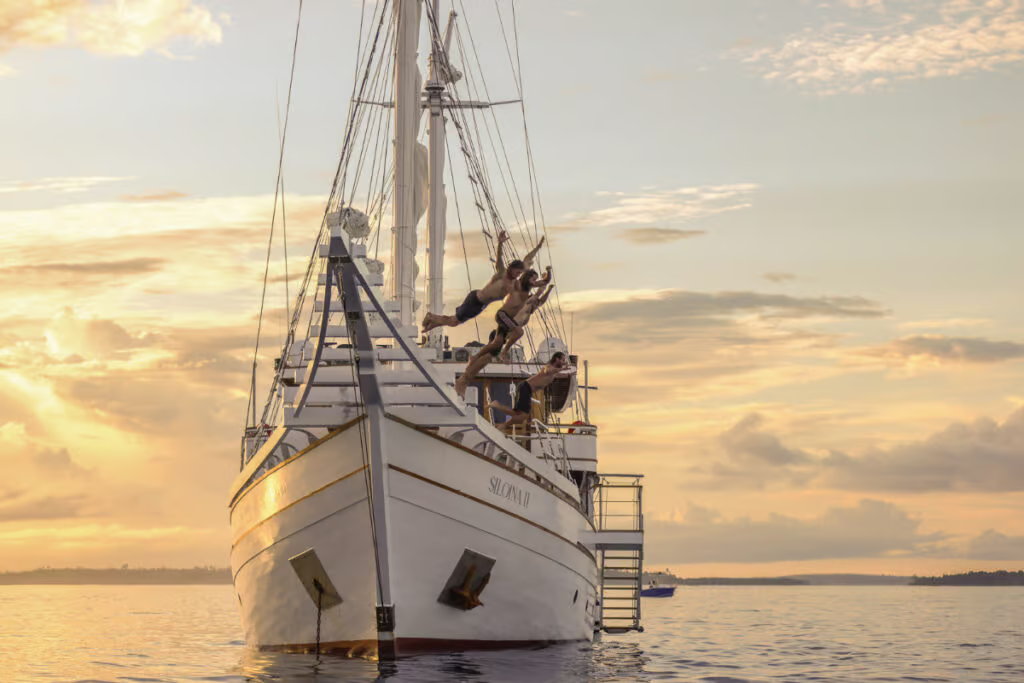
This is especially true on a private yacht charter, where the itinerary can adapt to the group. A newer Open Water diver may start with an easy check dive while more experienced guests explore a different site later in the day. Non-divers can snorkel, paddleboard, visit beaches, or simply enjoy the yacht and anchorage.
The best beginner diving in Indonesia is not about doing less. It is about diving with more care.
A good operator will not push beginner divers into advanced sites just because those names are famous. They will choose conditions that allow guests to relax, breathe properly, control buoyancy, and actually see what they came for.
Can Beginner Divers Dive In Komodo?
Yes, beginner divers can dive in Komodo, but not everywhere.
Komodo National Park is one of Indonesia’s most exciting scuba diving regions, known for manta rays, coral reefs, reef sharks, turtles, schooling fish, and dramatic underwater topography. It is also known for strong currents. That combination is exactly why Komodo needs to be planned carefully for beginner divers.
Some Komodo dive sites can be suitable for newer or improving divers when conditions are calm and the dive team chooses conservatively. Others are better left to experienced divers who are comfortable with drift dives, changing current, deeper profiles, and more demanding entries.
For beginners, Komodo works best when the operator is willing to adapt the plan daily.
That may mean starting with a simple check dive, choosing sheltered reefs, snorkelling certain manta sites instead of diving them, or skipping a famous site if the current is not right.
Beginner divers in Komodo should look for:
- experienced local dive guides
- conservative site selection
- clear dive briefings
- small groups or private guiding
- flexible scheduling around tides and currents
- alternative snorkelling or land-based activities
- no pressure to dive advanced sites
This is where private yacht charters can be especially useful. Komodo is not only about scuba diving. A well-designed itinerary can include snorkelling, pink beaches, paddleboarding, island viewpoints, wildlife encounters, quiet anchorages, and time ashore. That means beginner divers do not need to force every underwater opportunity into a dive.
Komodo is not the easiest place in Indonesia to be a brand-new diver. But with the right dive yacht, crew, dive team, and itinerary, it can be an exceptional destination for beginner or improving divers who are guided carefully.
Can Beginner Divers Dive In Raja Ampat?
Yes, beginner divers can dive in Raja Ampat, but again, the trip needs to be planned with respect for the region.
Raja Ampat is one of the most celebrated scuba diving destinations in Indonesia, known for extraordinary coral reefs, dense fish life, manta rays, reef sharks, turtles, and some of the richest marine biodiversity in the world. It is also remote, current-sensitive, and environmentally fragile.
That does not make Raja Ampat unsuitable for beginner divers. It simply means beginners need the right support.
Not every dive site in Raja Ampat is advanced. Some areas offer shallow coral gardens, sheltered reefs, calm bays, and relaxed underwater conditions that can be suitable for newer Open Water divers. Other sites involve stronger currents, deeper profiles, or more demanding drift dives that are better left to experienced divers.
For beginner divers, Raja Ampat works best when the dive team can choose sites carefully and adjust the plan each day.
A good Raja Ampat dive plan for beginners should include:
- honest assessment of certification level and recent dive experience
- a relaxed check dive at the start of the charter
- careful site selection based on tide, current, and visibility
- strong buoyancy guidance to protect coral reefs
- small groups or private guiding where possible
- clear briefings before every dive
- freedom to snorkel instead of dive when conditions are not suitable
This last point matters. Raja Ampat has some of the best snorkelling in Indonesia, and many of its reefs begin close to the surface. For beginner divers, that means there is no need to force a dive just because the yacht is anchored near a famous site. Some experiences are better enjoyed slowly, from the surface, with no pressure and full visibility over the reef.
Raja Ampat is also a strong destination for mixed-level groups. Confident divers may be able to explore more challenging sites with the right guide, while newer divers focus on calmer reefs and snorkelling. Non-divers can still enjoy lagoons, beaches, kayaking, paddleboarding, viewpoints, village visits, and quiet anchorages.
For beginner divers, Raja Ampat can be unforgettable. But it should be approached with humility, good planning, and experienced operators who understand when to dive, when to wait, and when to choose a gentler reef instead.
What About Triton Bay And Other Remote Dive Regions?
Triton Bay sits in a different category from Komodo and Raja Ampat. It is quieter, more remote, and less developed as a mainstream dive destination — which is exactly why it appeals to experienced travellers looking for something rare.
For beginner divers, Triton Bay can be suitable, but only with a carefully managed private itinerary. This is not the place for rigid dive schedules or casual planning. The region rewards slow exploration, patient site selection, and a dive team that understands both the water and the people onboard.
The diving itself is highly visual: soft corals, reef fish, black coral forests, macro life, and dramatic underwater colour. Conditions can be gentle in the right areas, but the remoteness raises the standard for planning. If a newer diver is joining a Triton Bay charter, the yacht, crew, and dive operation need to be aligned before the trip begins.
For Boatique guests, Triton Bay is usually best suited to:
- calm beginner divers travelling with experienced support
- mixed-level groups looking for privacy and flexibility
- guests who are happy to combine diving with snorkelling and exploration
- travellers who value remote anchorages over busy dive circuits
- private charters where the pace can be adjusted day by day
Other remote Indonesian regions need the same level of judgement.
Cenderawasih Bay can work well for mixed-experience groups, especially when the itinerary is built around whale shark encounters, snorkelling, gentle exploration, and selected dives.
The Banda Sea is more expeditionary. It can offer extraordinary diving, but many routes are better suited to intermediate or advanced divers because of distance, exposure, and open-water conditions.
Alor is often spectacular, but it is not an obvious beginner choice. Currents can be powerful and unpredictable, so it is generally better saved for divers with stronger experience.
The important distinction is this: remote does not automatically mean unsuitable for beginners. But remote always raises the importance of operator experience.
In places like Triton Bay, Cenderawasih Bay, the Banda Sea, and Alor, the best question is not “Can a beginner dive there?” It is “Can this specific trip be planned safely around this specific diver?”
For private yacht charters, that answer depends on the vessel, the onboard dive team, the season, the route, and the flexibility of the itinerary. That is where experienced planning becomes essential.
Why Experienced Dive Operators Matter More Than Famous Dive Sites
By this point, the pattern is clear: Indonesia is not beginner-friendly or advanced by destination alone.
Komodo can be gentle or demanding. Raja Ampat can be calm or current-sensitive. Triton Bay can feel slow and sheltered on one day, then require far more judgement the next. The name of the region matters less than the decisions being made around it.
That is why operator experience is the deciding factor.
A strong Indonesia dive operator will know:
- which sites suit newer Open Water divers
- when a manta site is better snorkelled than dived
- how tides and moon phases affect current
- when to begin with a check dive
- how to separate mixed-level divers safely
- when to change the plan entirely
- how to balance ambition with guest comfort
This is especially important on a private yacht charter. Remote diving is not only about having tanks and dive gear onboard. It requires coordination between the captain, cruise director, dive guides, crew, and charter planner before and during the trip.
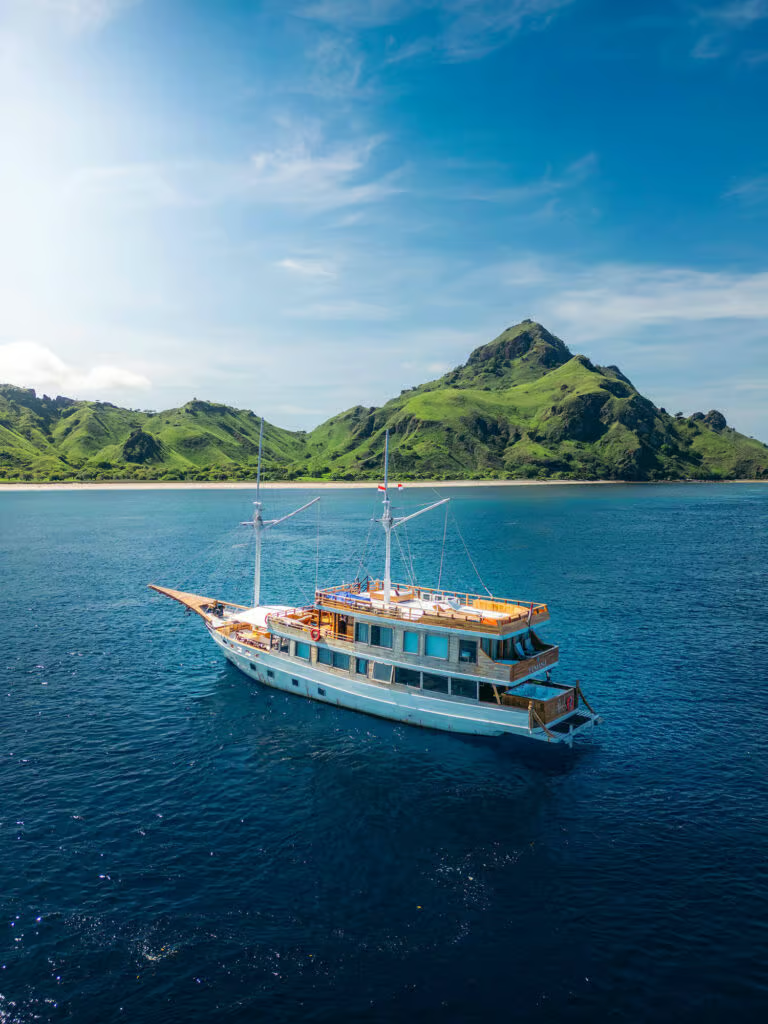
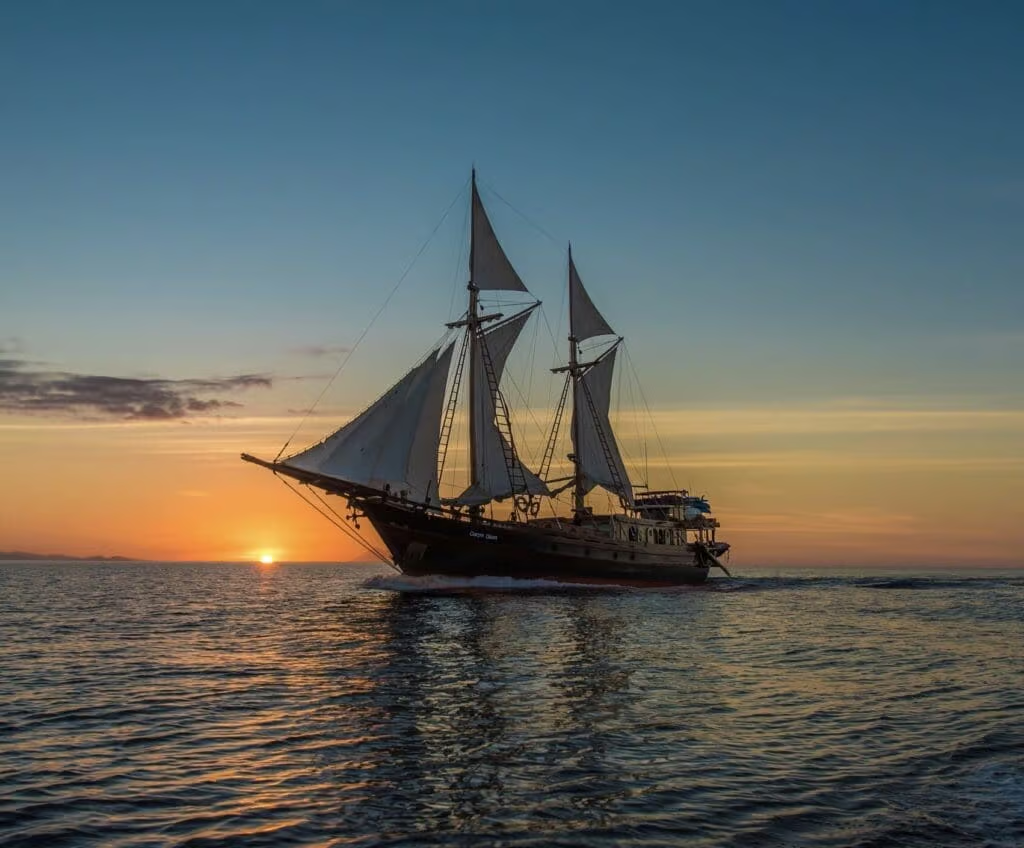
Boatique is strongly positioned here because our experience is operational, not theoretical. We own Calico Jack and Anne Bonny, two Indonesia dive charter vessels with deep roots in the region, and bring more than 20 years of dive experience across Indonesian waters. That gives our team firsthand knowledge of the reefs, seasons, currents, anchorages, crews, and guest profiles that shape a successful dive charter.
For beginner or mixed-level groups, that experience matters. The goal is not to promise every famous dive site in advance. The goal is to design a charter where each guest can experience Indonesia’s underwater world at the right pace, with the right support, and without being pushed beyond their limits.
Can You Learn To Dive In Indonesia?
Yes. Indonesia is one of the best places in the world to learn to dive, especially if you choose the right region, instructor, and pace.
For complete beginners, destinations such as Bali, the Gili Islands, and parts of North Sulawesi are often the simplest places to complete a PADI Open Water course, SSI certification, or introductory scuba programme. These areas have established dive schools, accessible training sites, and easier logistics than Indonesia’s more remote yacht charter regions.
That said, learning to dive and joining a private dive charter are not quite the same thing.
If you are not yet certified, it is usually best to complete your Open Water course before joining a remote yacht itinerary in Komodo, Raja Ampat, Triton Bay, or the Banda Sea. These regions can be extraordinary for newer divers, but they are better experienced once you already understand buoyancy, breathing, equalisation, hand signals, buddy awareness, and basic dive safety.
For guests who are already certified but still inexperienced, a private yacht charter can be planned with a slower start: a check dive, gentle reef sites, refresher sessions where appropriate, and plenty of snorkelling options while confidence builds.
Some Indonesia dive charters may also be able to support continuing education, such as PADI Advanced Open Water, Nitrox, or specialty training, depending on the yacht, instructor availability, itinerary, and local conditions. This should always be confirmed before booking rather than assumed.
For a full guide to certification options, beginner-friendly regions, PADI courses, course structure, and what to expect, read our guide to learning to dive in Indonesia.
Frequently Asked Questions
Is Indonesia good for beginner divers?
Yes, Indonesia can be excellent for beginner divers, but only when the right dive sites, season, operator, and itinerary are chosen. Some areas offer calm coral gardens, shallow reefs, and easy check dives, while others involve strong currents, drift dives, deep walls, or remote conditions better suited to experienced divers.
Can beginners dive in Komodo?
Yes, beginners can dive in Komodo, but not at every site. Komodo has some calmer reefs and suitable beginner dives when conditions are right, but it also has strong currents and advanced dive sites. A good operator will choose sites based on tide, current, visibility, and the diver’s confidence level.
Is Raja Ampat suitable for beginner divers?
Raja Ampat can be suitable for beginner divers with experienced guides and careful planning. Some reefs are shallow, colourful, and manageable, while other sites are current-sensitive or better suited to advanced divers. For newer divers, Raja Ampat works best with conservative site selection and strong buoyancy awareness.
Is Triton Bay good for beginner divers?
Triton Bay can work for beginner or improving divers on a carefully planned private charter. It is remote and less developed than some other Indonesian dive regions, so the yacht, crew, dive team, and itinerary need to be chosen with care. It is best for calm beginners who are comfortable following guide direction and taking the trip at a slower pace.
Do I need Advanced Open Water to dive in Indonesia?
Not always. Open Water divers can enjoy many suitable dive sites in Indonesia, especially when guided by experienced operators. However, Advanced Open Water can be helpful for confidence, depth awareness, drift diving, and varied conditions. For remote regions, your recent dive experience and comfort in the water often matter as much as the certification card.
Are strong currents common when diving in Indonesia?
Yes, strong currents are common in some parts of Indonesia, especially in regions such as Komodo, Raja Ampat, Alor, and parts of the Banda Sea. Currents help support Indonesia’s rich marine life, but they also require careful planning. Beginner divers should only dive current-sensitive sites with experienced guides and suitable conditions.
What makes a dive site beginner-friendly?
A beginner-friendly dive site usually has manageable depth, predictable current, good visibility, simple entry and exit, and a clear dive plan. It should allow newer divers to focus on breathing, buoyancy, and awareness without being rushed or pushed into conditions beyond their ability.
Is a private yacht charter suitable for beginner divers?
Yes, a private yacht charter can be very suitable for beginner divers, especially for families and mixed-level groups. The itinerary can be adapted around different comfort levels, with some guests diving, others snorkelling, and others enjoying beaches, kayaking, paddleboarding, wildlife, or time onboard.
Can non-divers enjoy a dive-focused yacht charter in Indonesia?
Yes. Many of Indonesia’s best dive regions are equally rewarding for non-divers. Komodo, Raja Ampat, Triton Bay, and Cenderawasih Bay offer snorkelling, beaches, viewpoints, wildlife, kayaking, paddleboarding, village visits, and quiet anchorages. This makes private yacht charters especially strong for groups where not everyone dives.
What should beginner divers ask before booking an Indonesia dive charter?
Beginner divers should ask about guide ratios, safety equipment, oxygen, emergency procedures, site selection, current, depth, entry style, refresher dives, and whether the itinerary can change if conditions are unsuitable. They should also be honest about their certification level, number of dives, and how recently they have been underwater.
Read More