You’ve seen the content and got the itch to visit Komodo.
But when you go matters. A lot. Komodo isn’t just about sunny skies and snapping dragon selfies, it’s a dynamic, seasonal destination. The best time to visit? That depends on what you want: wildlife, diving, solitude, Insta-pink beaches, or whale shark encounters.
Here’s your no-nonsense, research-backed, experience-driven guide to the best time to sail Komodo National Park, month by month, island by island, species by species.
Boatique Charters know these regions like the backs of their hands thanks to many years of sailing here, and with our partner network of the finest Komodo liveaboards and charters, we ensure your charter is more than you can ever dream of.
Komodo At a Glance: Best Times for Different Experiences
| Experience | Best Time to Visit |
| Overall Sailing & Exploration | April – June, September – November |
| Komodo Dragons (Active) | March – May, Sept – Oct |
| Dragon Mating Season | June – August (less visible) |
| Manta Rays | Dec – March (South), Sept – Nov (Central) |
| Whale Sharks | April – June |
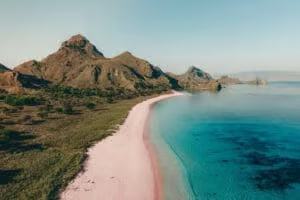
| Pink Beach | April – December |
| Diving (Best Conditions) | May – October |
| Cheapest Time | Jan – March (Wet Season) |
| Fewer Crowds | April – June, Sept – Nov |
| Festivals | March (Komodo Fest), Sept (Boat Races), April (Wae Rebo) |
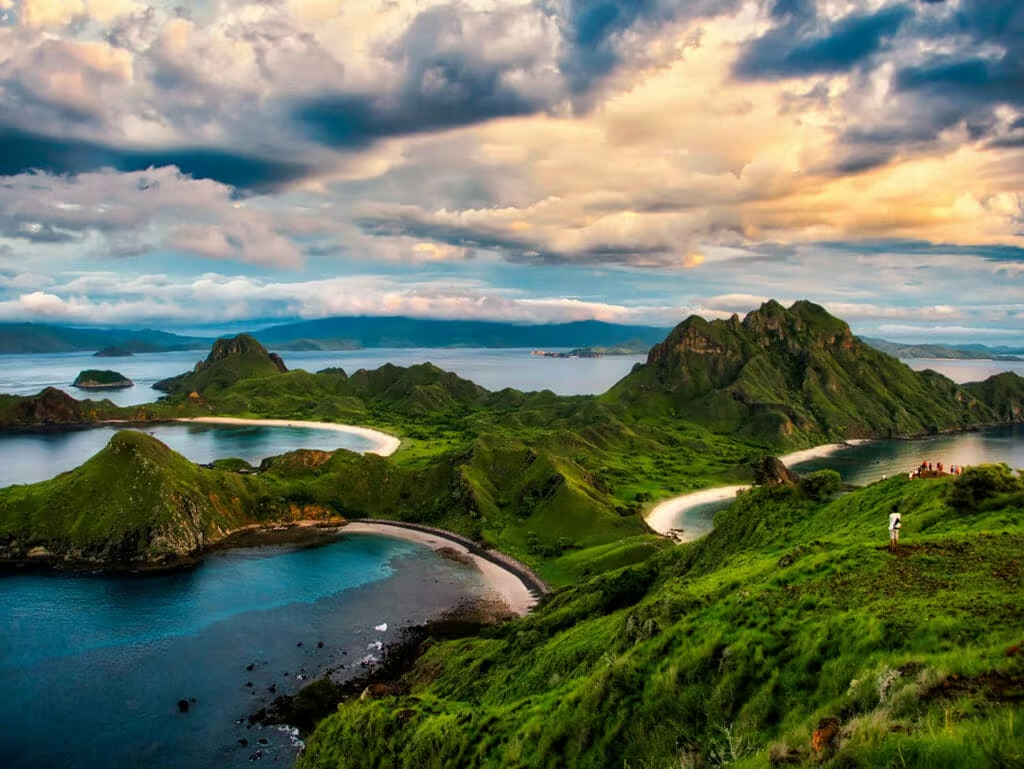
April – June: Green, Glorious, and Full of Life
This is prime Komodo. The islands are lush from the rain season, seas are calm, the temperature’s ideal, and you might even spot a whale shark.
- Komodo dragons: Active and hungry post-rain
- Diving: Clear water, minimal wind, epic visibility
- Weather: Warm days (33°C), cool nights, low rain
- Mantas: Resident populations around Makassar Reef
- Bonus: Fewer tourists, great deals, Insta-perfect greenscapes
Boatique’s Tip: If you want to see Komodo at its most vivid, sail now.
July – August: Peak Season, Peak Prices
This is Komodo’s summer, dry, hot, and busier. Great conditions for sailing, but you’ll share the best snorkel spots with more charters and daily tourist boats from Labuan Bajo. That is of course unless your itinerary is planned by the experts that know how to get off the typical routes.
- Dragons: Harder to spot (they’re busy mating)
- Diving: Excellent in the north & central park
- Weather: Very dry, 33°C+, with cool evening breezes
- Vibe: High energy, high foot traffic
- Booking: DO IT EARLY
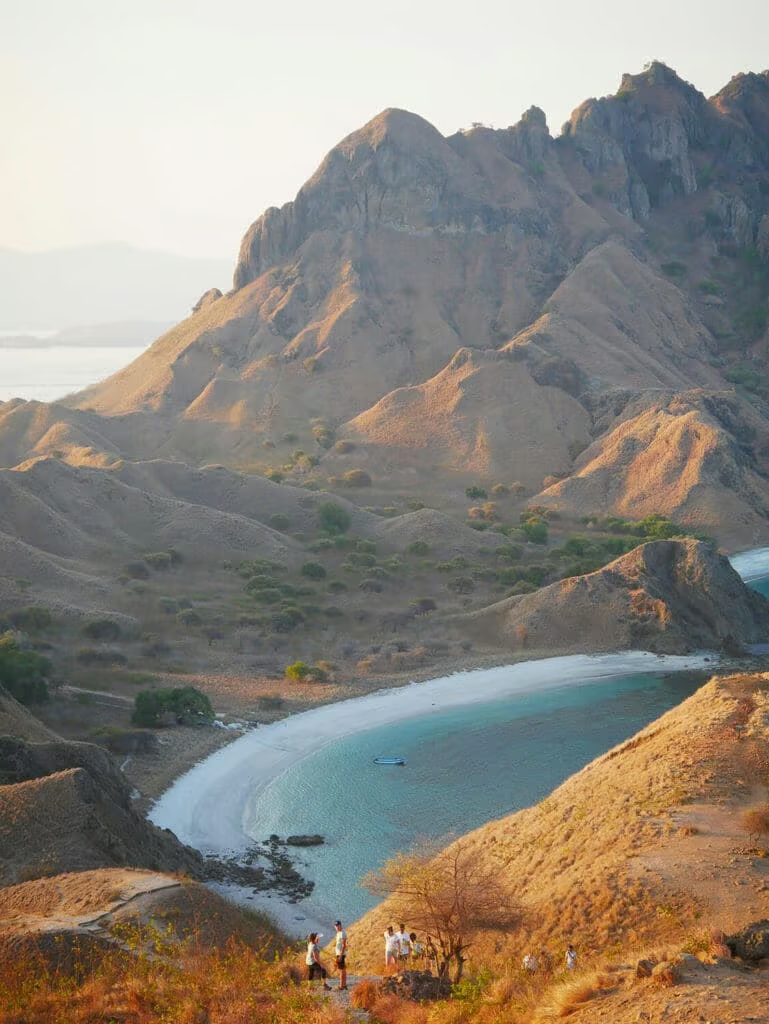
September – November: The Secret Season
Let’s not gatekeep, this is a great time to sail Komodo. Dragons are active, mantas are back, whales migrate, and the crowds? Largely gone as many boats head off to other regions.
- Wildlife: Peak for mantas, dragons, and migrating whales
- Water: Calm, clear, perfect for diving/snorkeling
- Weather: Hot (33–35°C), with low rain until Nov
- Bonus: Shoulder season = lower rates, more availability
This is when Boatique sends clients who say “we want the best of everything.”
December – March: The Wet, the Wild, the Discounted
Fewer boats cruise, but you’ll find a quieter, moodier Komodo full of surprises. Southern Komodo shines this time of year.
- Manta Alley: Absolute peak
- Dragons: Surprisingly active in early Jan
- Weather: Rainy (esp. Feb), humid, still warm (30–32°C)
- Sailing: Southern routes preferable, diving visibility lower
- Prices: Low season = best deals
If you don’t mind the rain, you’ll love the solitude.
Komodo Weather by Month
| Month | Temp (°C) | Rain Days | Notes |
| Jan | 30–32 | 20–24 | Wet, low traffic, dragons active |
| Feb | 30–32 | 20–23 | Rainy, many boats pause trips |
| Mar | 31–33 | 14–18 | Transition month, lush & dramatic |
| Apr | 31–33 | 10–13 | Start of dry, great diving |
| May | 32–33 | 6–8 | Epic conditions north & central |
| Jun | 31–32 | 3–5 | Mating dragons, clear seas |
| Jul | 31 | 1–3 | High season, great weather |
| Aug | 31–33 | 1–3 | Dry, hot, dive boats everywhere |
| Sep | 33–34 | 1–2 | Best combo of calm + wildlife |
| Oct | 34–35 | 4–6 | Mantas return, uncrowded dives |
| Nov | 34–35 | 10–14 | Hot, some rain, whales migrating |
| Dec | 32–33 | 15–20 | Calm south seas, manta hotspot |
Komodo Tips from the Experts
- Dragons are best spotted outside the mating months (June–Aug).
- Mantas love the south in the wet season, and the center/north in the dry.
- Whale sharks: Your best chance is April–June.
- Pink Beach is most vibrant in the dry months—but still beautiful year-round.
- Avoid February unless you like being rained on while mildly seasick.
Best Time to See Komodo Dragons
For those intent on witnessing Komodo dragons in their natural habitat, timing is everything. These formidable reptiles are most active during the dry season, from April to October, when the climate is stable and the islands are at their most accessible.
Early morning, particularly before 10 AM, is when you’re most likely to observe them on the move: patrolling territory, foraging, or basking in the soft light of the day’s beginning.
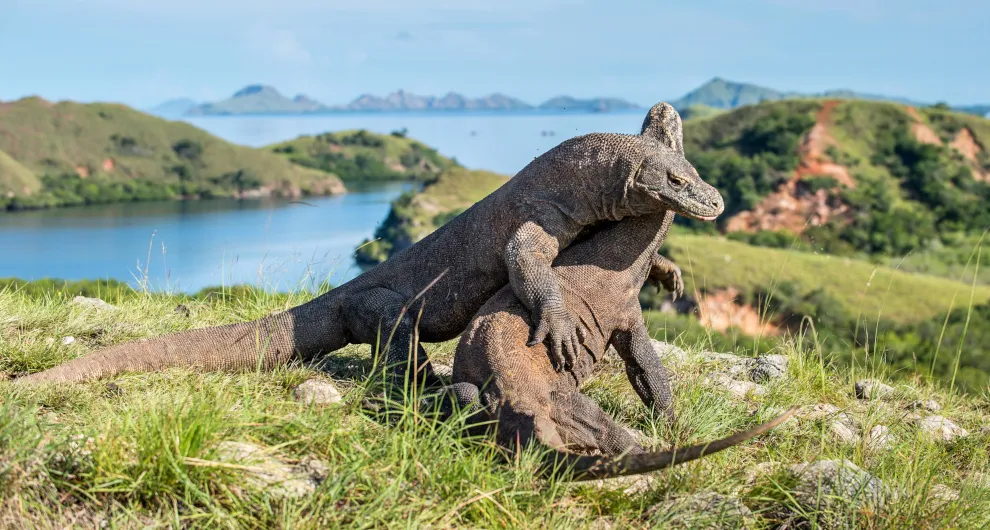
April to October – Dry Season
This is the ideal time to visit Komodo National Park to see the dragons. The weather is reliable, the seas are calm, and the conditions for trekking are optimal. It’s when the dragons are most visible, particularly along exposed trails and coastal plateaus.
Early Mornings – Active Sightings
As the temperature rises, dragons tend to retreat to shaded areas. Early hours offer the best opportunity to observe them in motion, engaging in natural behaviors rather than simply resting.
July to August – Mating Season
While this period offers the rare chance to observe the dramatic rituals of mating, territorial battles and courtship, it can also make sightings less predictable. Dragons become more reclusive, often staying close to water sources and away from common trails.
Shoulder Seasons – April to June, September to October
These months strike a balance between favorable weather and a more tranquil atmosphere. Sightings are still excellent, but with fewer visitors, the experience feels more private, ideal for those seeking a quieter, more immersive encounter.
Boatique Insight: We recommend planning dragon treks early in your itinerary, while guests are fresh, light is soft, and wildlife is most active. Our guides collaborate with local rangers to time your visit for peak conditions, ensuring a respectful and remarkable encounter with one of nature’s most iconic predators.
Best Time to See Manta Rays
Graceful and utterly captivating, manta rays are one of Komodo’s most sought-after encounters. Present year-round, they can often be seen gliding over coral gardens or circling cleaning stations like winged phantoms. But for those hoping to maximize their chances of seeing large aggregations, understanding their seasonal patterns is key.
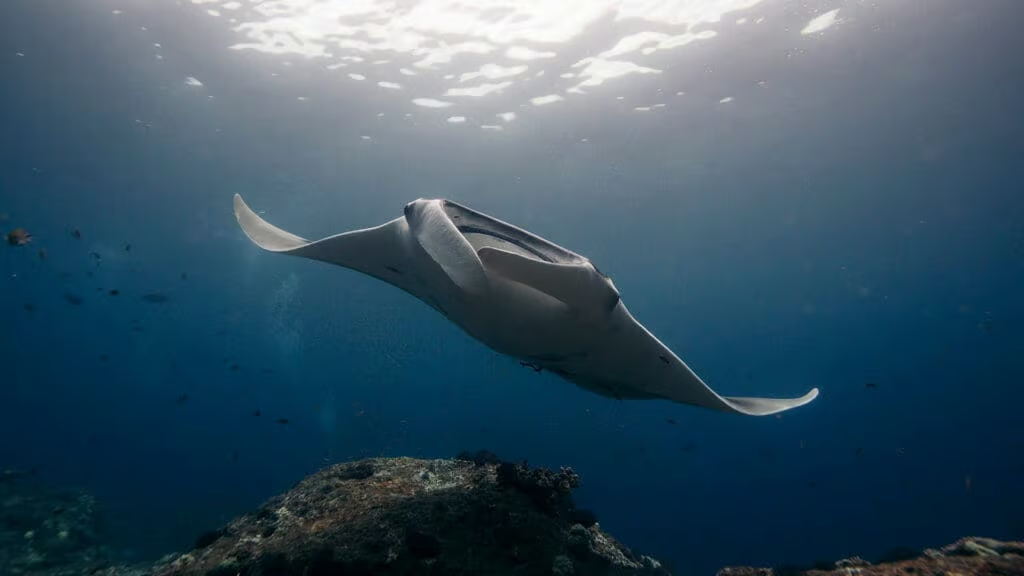
December to March – Peak Season in the South
The wet season marks the height of manta ray activity in South Komodo, particularly around Manta Alley. Plankton blooms attract large numbers of rays, often forming elegant formations known as “mating trains.” Though conditions can be more dynamic—occasional rain and stronger currents—this is when you’re most likely to witness Komodo’s manta population in full performance.
March to October – Consistent Sightings in the North
During the drier months, North Komodo becomes the prime location for manta sightings, especially juvenile rays. Sites like Makassar Reef and Manta Point remain reliable throughout the season, with calmer seas and excellent visibility. These months offer a more stable environment for divers, and the added bonus of clearer skies above.
Best Time of Day
Early morning dives are often most productive, particularly at cleaning stations where mantas linger as wrasse and cleaner fish work their magic. That said, midday dives can also deliver stunning encounters.
Where to Go
- Manta Alley (South Komodo): Best during the wet season, known for dramatic aggregations.
- Makassar Reef & Manta Point (Central/North): Reliable year-round sites, particularly during the dry season.
Expert Tips
- Choose the right dive operator. We partner only with seasoned professionals who know how to time dives for maximum impact while respecting wildlife protocols.
- Check your certification level. Many manta sites involve strong currents and drift conditions, perfectly manageable with the right preparation and guidance.
- Observe respectfully. No chasing, no touching. Let the moment unfold naturally and you’ll be rewarded with something far more meaningful.
Boatique Insight: For the ultimate manta experience, we often recommend combining both northern and southern dive zones into your Komodo itinerary, giving you a wider range of encounters while avoiding the crowds. Our guides customize each charter based on seasonal conditions and guest interests, ensuring every dive counts.
Festival Watch
Want a cultural twist with your cruise? Time your trip with:
- Komodo Festival (March) – Celebrate biodiversity with hikes, dives, music & feasts.
- Tado Boat Races (September) – Traditional phinisi boat races and local pride on full display.
- Wae Rebo Festival (April) – In nearby Flores, for traditional music, food, and weaving in a mountaintop village.
Komodo Liveaboard Itineraries
All trips with Boatique Charters are tailor made to the people onboard. Bit itineraries help get some ideas together and help you see what is possible.
Final Verdict
So… when should you sail Komodo?
- For Instagram glory and lush landscapes: April or May
- For whales and mantas: September or October
- For diving + peace: November shoulder season
- For cheapest trip deals: January to March
- For dragons : March, April, October
Whenever you go, Boatique Charters will make sure you sail smart. We tailor everything, routes, activities, meals and travel to match the season and your style.
More helpful Komodo Information: